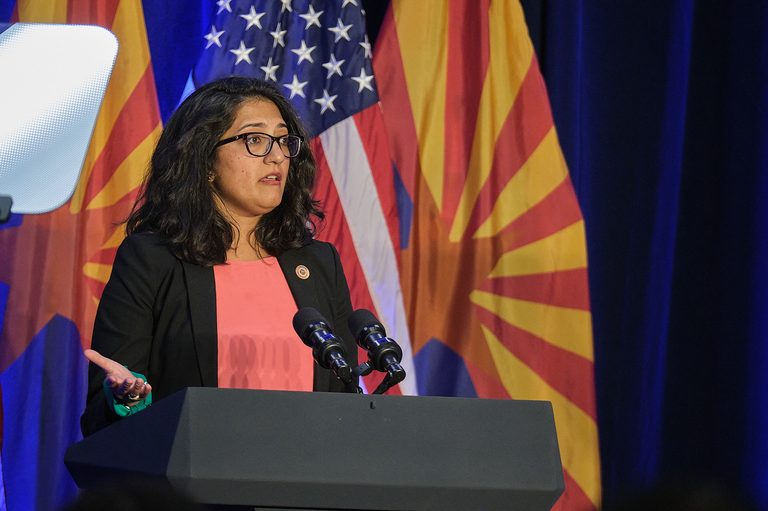
On Friday, Democratic colleagues in the Arizona Senate voted Priya Sundareshan, D‑Tucson, as president‑elect of the chamber, a historic first for a Tucson‑area legislator and the first Democratic Senate president since 1991. The move comes as Democrats are poised to control 20 of the Senate’s 30 seats, giving the party a two‑thirds supermajority for the first time since 1992, according to Arizona Mirror.
Sundareshan, an MIT‑trained engineer and former University of Arizona law professor, won reelection from Legislative District 18 on Nov. 3 and was selected on Nov. 6 for the role that will begin when lawmakers reconvene in January 2027. She will succeed current Senate President Warren Petersen, who unsuccessfully ran for attorney general, leaving his successor undecided.
In addition to Sundareshan’s elevation, Democrats announced their leadership slate: Christine Marsh of Phoenix will serve as majority leader, Analise Ortiz of Phoenix as majority whip, and Tucson Sens. Alma Hernandez and Edgar Soto will act as presidents pro tempore. Republican leaders have yet to name their minority leadership, the Arizona Mirror reported.
American Bazaar Online highlighted that the Democratic takeover also gives the party control of the state House and the governor’s office, creating unified control of Arizona government for the first time since 1966. Sundareshan told Tucson.com that Southern Arizona has long lacked representation in the majority and said, “Well, here we are.” She emphasized an affordability agenda focused on lowering living costs, protecting water resources, expanding public‑education investment, and curbing fraud in the Empowerment Scholarship Account program.
Local implications were underscored by Tucson.com, which noted that Tucson and Pima County have historically been under‑represented in state budgeting decisions. Recent budget negotiations saw a $5.7 million cut to the University of Arizona—far less than the $14 million cut originally proposed by Republicans—and the Rio Nuevo tax‑increment district avoided a $19 million reduction, though new spending conditions were added.
Transportation funding remains a concern. The Highway User Revenue Fund, traditionally supported by a fuel tax that has stayed at 18 cents per gallon since 1990, has been depleted in prior sessions, prompting Tucson voters to approve local half‑cent sales‑tax measures for road improvements.
Mayor Regina Romero praised Sundareshan’s ascent, saying the city is “incredibly proud” and looking forward to partnering on Tucson’s Safe City Initiative, affordable housing, infrastructure, and climate‑resilience efforts.
What’s next: The new Senate leadership will convene its first session in January 2027. Sundareshan and her caucus plan to advance their affordability agenda, protect higher‑education funding, and address water‑conservation and infrastructure needs that directly affect Tucson residents.
Sources: azluminaria.org, americanbazaaronline.com, tucson.com