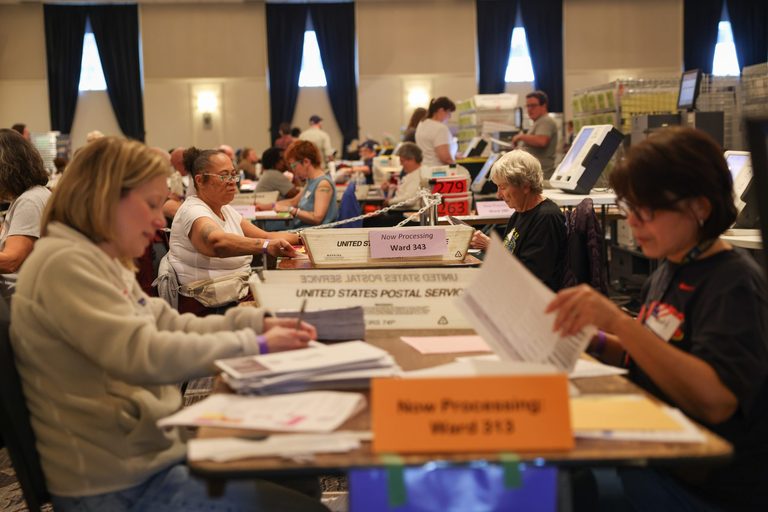
On Tuesday night, Milwaukee’s central absentee‑ballot counting center ran into a series of equipment and clerical problems that threatened to slow the 2026 election tally. The issues, reported by local officials, included an unsealed tabulator, missing poll numbers on 242 ballots, and two machines that refused large ballot batches.
Equipment failures surface
Shortly after polls opened, staff noticed that a tabulator – still unused – was missing a proper security seal on a panel door. Hours later, workers realized that election staff had failed to write the required unique identifying numbers on the back of 242 absentee ballots, a step mandated by state law in certain municipalities. While the ballots were ultimately counted, the oversight highlighted a gap in the city’s quality‑control process.
Additional hiccups emerged when two tabulators would not accept large batches of ballots, and a third machine displayed error messages when officials attempted to download results. Such technical glitches are not unheard of in a city handling a massive volume of absentee votes, but they underscore the need for vigilant oversight.
City officials respond
Milwaukee election chief Paulina Gutiérrez downplayed the impact of the errors, emphasizing the multiple layers of redundancy built into the system. “Humans can make mistakes,” she said. “That’s why there are multiple layers, paper trails, and safeguards to ensure the accuracy and security of the election isn’t compromised.” Gutiérrez added that the 242 ballots without poll numbers were still processed as legitimate votes and that a tracking method exists should any further verification be required.
Democratic Wisconsin Elections Commission appointee Ann Jacobs echoed the sentiment, noting that with a trained staff of 100‑150 people, isolated mistakes do not indicate a systemic failure. “If you’ve got 100 or 150 people who have been trained to process absentee ballots, and two people at one table mess up, your training’s still really good,” Jacobs said.
Expert and partisan perspectives
Chris Piper, former top election official in Virginia and co‑founder of Advance Elections, warned that repeated errors merit investigation to uncover root causes. “If there are repeated errors, investigation is necessary to determine the actual root cause,” he said.
Republican critics have seized on the mishaps, arguing they reveal deeper problems in a city that reliably delivers Democratic votes in a largely rural state. However, several neutral observers caution against inflating isolated incidents into a narrative of widespread fraud.
Former Pennsylvania Secretary of State Kathy Boockvar pointed to chronic underfunding as a primary driver of such issues. “When we don’t fund any program area with sufficient resources, you end up with a situation like I’m sure Milwaukee has — like probably most jurisdictions in this country — where election officials are underfunded and understaffed,” she said. Boockvar stressed that adequate funding and modern equipment are essential for an efficient voting system.
Historical context and oversight
Milwaukee’s track record of election‑related errors has made it a frequent target for Republican scrutiny. The Wisconsin Elections Commission (WEC) has the authority to investigate municipal election operations when concerns arise, but Jacobs noted that WEC has not yet opened a formal probe into Milwaukee’s recent problems because the city has addressed the issues promptly.
In contrast, the commission has investigated other Wisconsin municipalities, such as Madison’s 193 missing ballots in 2024 and Green Bay’s duplicate absentee ballots across two elections, demonstrating that oversight is applied when needed.
Looking ahead
While the immediate glitches were resolved without disenfranchising voters, the episode reinforces calls for better equipment, more staffing, and continued transparency. As Milwaukee prepares for future elections, officials say the lessons learned will inform upgrades to both hardware and procedural checks, aiming to keep the city’s voting process reliable and trustworthy.
Original reporting: Wisconsin Watch — read the source article.