It’s two in the afternoon, the sky over the peninsula has gone the color of old pewter, and you’ve already done King Street twice. What now?
Walk to the College of Charleston campus and find the Halsey Institute of Contemporary Art on Calhoun Street. It won’t take long — the building is easy to miss if you’re moving fast, which is exactly why most visitors never find it. That’s their loss. The Halsey is free, it’s serious, and it has nothing to prove to tourists.
Founded in 1984, the Halsey functions as a teaching museum attached to the university, but don’t let that make you picture dusty student work tacked to cinder block walls. The programming here is genuinely ambitious. Past exhibitions have brought in artists grappling with Gullah Geechee identity, the afterlife of colonial architecture, climate and coastline, diaspora and displacement — work that feels specific to the South without being quaint about it. Whatever’s up when you visit, it was almost certainly thought through carefully. Check the schedule at halsey.cofc.edu before you go, because exhibitions rotate and some require advance tickets for opening events.
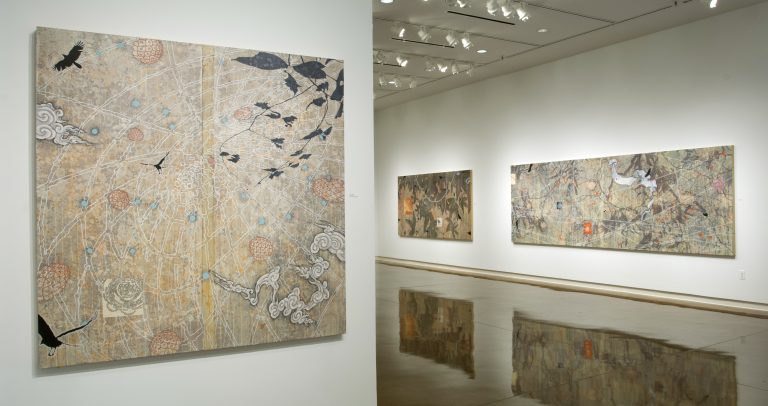
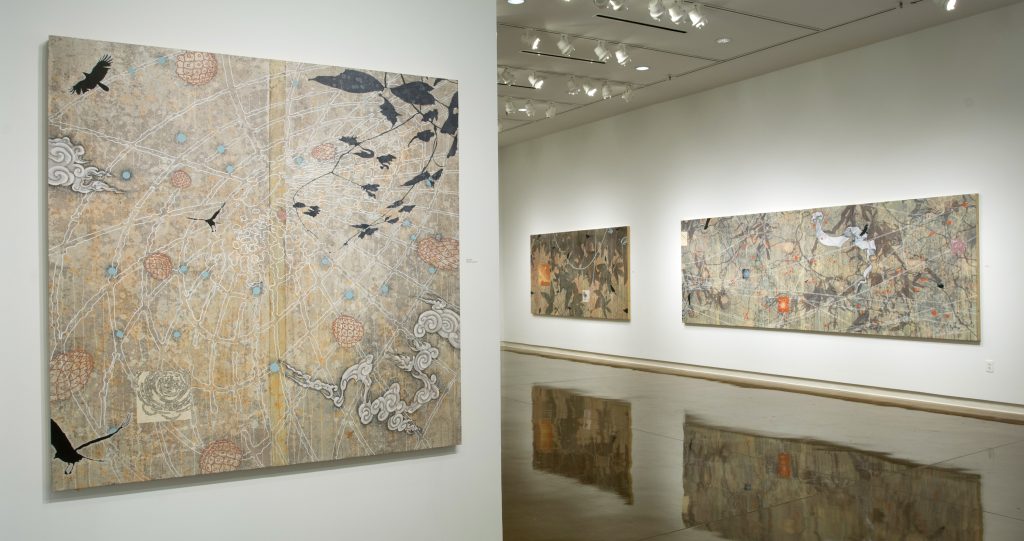
The main gallery space is compact but well-proportioned, with the kind of lighting that makes you forget you’re indoors. There’s usually a smaller adjacent room with related prints, objects, or archival material that deepens the main show rather than repeating it. Spend forty minutes here and you’ll leave having actually looked at things, which is rarer than it should be.
The staff and student docents are worth talking to if someone approaches you. They know the work and they’ll engage without hovering. If you’ve got questions about how a piece was made or what the curator was thinking, ask. This isn’t a ropes-and-velvet situation.
Admission is free, which makes the Halsey one of the more quietly remarkable institutions in a city that sometimes charges you to look at things that have been standing for three hundred years. There’s a small gift shop near the entrance with prints and artist publications, the kind of place where you might spend twenty dollars on a risograph zine and not regret it.
The neighborhood itself is worth noting. The Halsey sits on the edge of a part of campus that bleeds into the lower peninsula’s residential grid — shaded streets, old row houses, students on bikes. After your visit, walk a few blocks north toward Coming Street or cut south toward Broad. Either direction, you’re in a part of Charleston that moves at a different pace than the market district.
If you’re traveling with someone who thinks contemporary art isn’t for them, bring them anyway. The Halsey rarely goes in for art that requires a wall-length essay to decode. The work tends to have a visceral entry point — a material, a sound, a photograph — before it asks anything harder of you.
Rainy afternoon, free admission, real work on the walls. You could do considerably worse.