Tellus Science Museum sits about an hour northwest of Atlanta in Cartersville, which is far enough that most people in the city have never made the drive. That’s worth noting upfront, because the museum’s collection of meteorites alone — one of the largest publicly viewable collections in the southeastern United States — would justify a longer trip than that.
The building announces itself from the highway, a large angular structure that looks like it was designed to feel like the future, circa 2009, when it opened. Pull into the parking lot on a Saturday morning and you’ll see a mix of school-group buses and family minivans. Inside, once you’ve paid admission — $18 for adults, $12 for kids, and worth every dollar — the first thing you encounter is the minerals and gems hall. The cases are floor to ceiling, lit carefully, and crammed with specimens: fluorite the color of a clear sky, massive selenite crystals, and a chunk of bismuth that looks like it was dropped in from another planet. Kids press their faces against the glass. Adults do too.
The fossil hall is where the visit shifts into something more serious. A mounted Allosaurus skeleton anchors the room, but the cases on the perimeter deserve equal attention. There are ammonites the size of dinner plates, Cretaceous fish preserved in flat shale, and a wall dedicated to the prehistory of Georgia specifically — trilobites, coral reefs, and sea life from a time when this land was underwater. The exhibit text is informative without being condescending, which is rarer than it should be.
The meteorite collection occupies its own wing, and this is where Tellus earns its reputation. Some samples you can touch, cold and impossibly heavy for their size. The Gibeon meteorite display, iron from a fall in Namibia, looks almost sculptural. A docent was explaining the difference between chondrites and iron meteorites to a cluster of eight-year-olds when I visited, and he was good at it — the kind of person who clearly loves what he’s talking about.
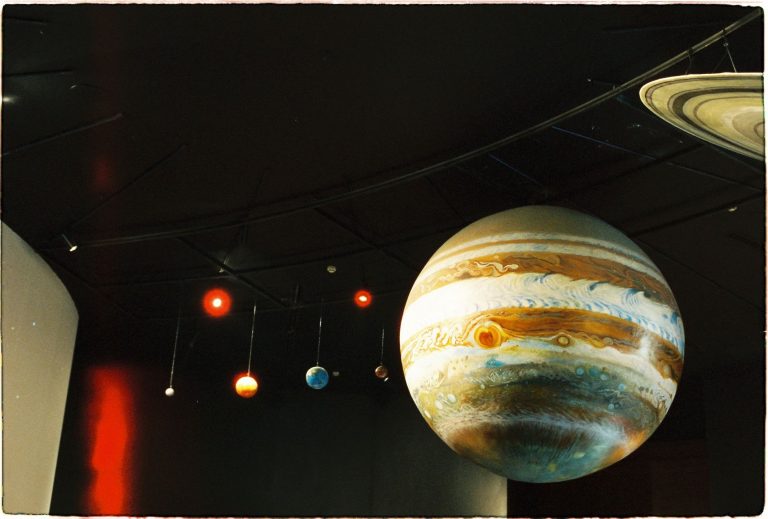
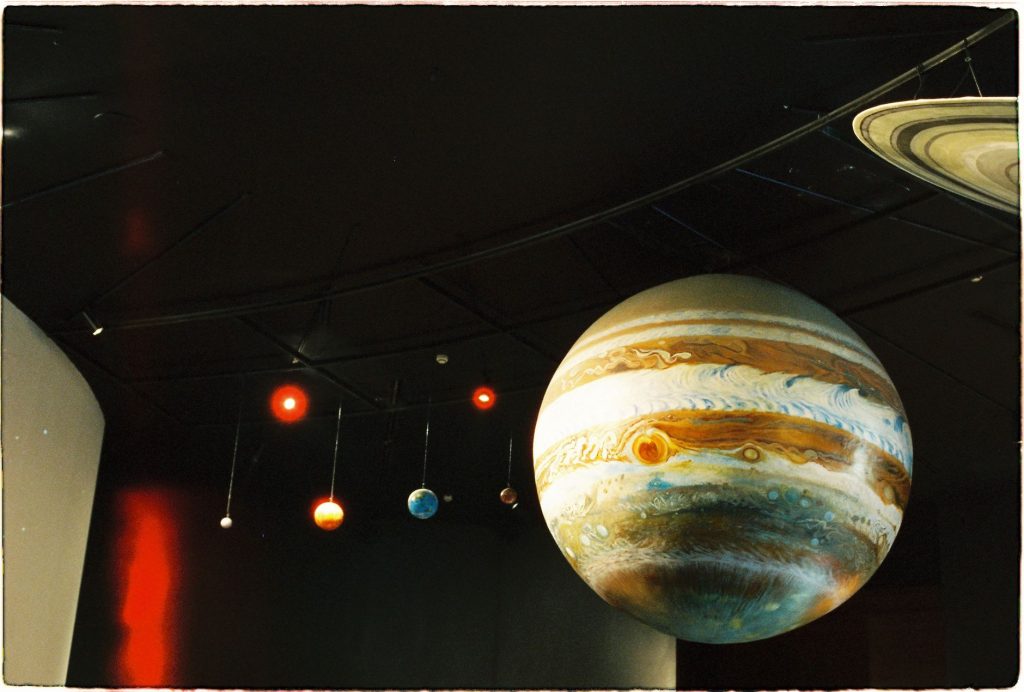
Upstairs, the science in motion exhibit is more interactive and skews younger, though the physics demonstrations are well-constructed. The digital planetarium runs scheduled shows throughout the day; the noon show on a recent Saturday covered the life cycle of stars and lasted about 25 minutes. The dome is small by major-city standards but the projection is sharp, and the reclining seats make it easy to settle in.
There’s a fossil-dig simulation outside, seasonal and not always open, but the main building keeps you busy for two to three hours without rushing. The on-site café is basic — sandwiches, chips, fountain drinks — and you won’t mistake it for anything else. Bring snacks if your group is picky.
The drive up I-75 from Atlanta takes you through Marietta and into Cherokee County, the landscape opening up gradually. If you’re making a day of it, the Etowah Indian Mounds State Historic Site is about fifteen minutes away and pairs well with the geology context you’ll have fresh in your mind. Tellus is the kind of place that rewards the effort of getting there, and the meteorites alone make it feel like you’ve seen something most people in Atlanta haven’t bothered to find.