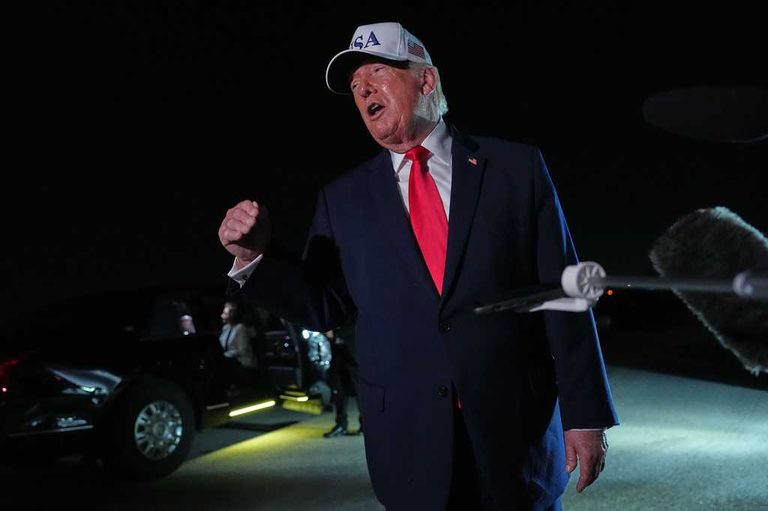
President Donald Trump told reporters in West Palm Beach, Florida, that the U.S. military conducted a limited, highly focused strike on an Iranian air‑defense system on Friday. He described the operation as “minor” and said the target was neutralized in roughly fifteen minutes.
Strike Details and Strategic Context
Iranian state media reported two explosions in the Suza area of Qeshm Island, a key chokepoint for oil shipments through the Strait of Hormuz. The U.S. military confirmed the explosions and added that similar defensive strikes were carried out earlier in the week on Qeshm, Hengam and the mainland port of Bandar Abbas.
U.S. officials noted that many of Iran’s air‑defense assets were already degraded during a June 2025 Israeli bombardment and early phases of the current conflict. While Iran is expected to attempt rebuilding these capabilities, the recent strike demonstrates the administration’s ability to swiftly neutralize emerging threats.
Diplomatic Efforts and Qatar Mediation
At the same time, Qatar presented new proposals to Tehran aimed at easing tensions over Iran’s nuclear program. Two unnamed officials said Iran is reviewing the plan but remains reluctant to negotiate until the United States meets several core conditions, including lifting the blockade on Iranian ports and releasing frozen assets.
President Trump affirmed that dialogue with Iran continues, stating, “We are talking to Iran. We have been.” He emphasized that the United States remains in control of the conflict and will not allow a battered Iran to threaten regional stability.
Reward Offer for Nuclear Information
U.S. Central Command announced on X that the United States is offering a reward of up to $20 million, plus possible relocation, for credible information about Iran’s nuclear program, facilities, equipment and personnel. The post linked to the State Department’s Rewards for Justice program, underscoring the administration’s commitment to exposing illicit nuclear activity.
Iran’s Demands and U.S. Position
Iran continues to demand the end of the U.S. blockade, the lifting of sanctions, the unfreezing of assets, compensation for war damage and a cessation of hostilities throughout the region, including Israeli actions in Lebanon. The Trump administration has declined these concessions, maintaining that any nuclear agreement must include robust verification and limits on Iran’s highly enriched uranium stockpile.
According to the International Atomic Energy Agency, Iran currently possesses roughly 440.9 kilograms of uranium enriched to 60 percent purity, a short technical step from weapons‑grade levels.
Regional Diplomatic Activity
In the days following the strike, Defense Secretary Pete Hegseth spoke with Qatar’s defense minister, Sheikh Saoud bin Abdulrahman Al Thani, about de‑escalation measures. Separate calls were reported between President Trump and Qatar’s emir, as well as between Iranian Foreign Minister Abbas Araghchi and his Iraqi and Tunisian counterparts.
Egyptian and Emirati foreign ministers also voiced support for flexible, compromise‑based solutions to prevent further escalation in the Persian Gulf.
Implications for U.S. Policy
The administration’s decisive military response, combined with a robust diplomatic outreach, reflects a balanced approach: protecting American and allied interests while pursuing a negotiated resolution to Iran’s nuclear ambitions. President Trump’s firm stance underscores a commitment to national security, energy stability and the rule of law.
Original reporting: KCCI Des Moines — read the source article.