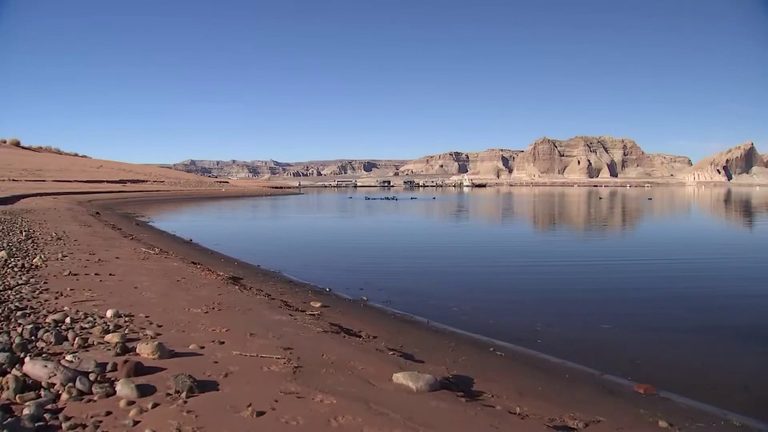
PAGE, AZ (AZFamily) — A welcome bout of rain this month lifted Lake Powell’s water level by roughly 19 feet between the end of September and November 5, according to the U.S. Bureau of Reclamation, and gave Lake Mead a modest increase as well. While the rise offers short‑term relief, experts caution that the Colorado River system still faces serious, long‑term drought challenges.
Current water levels remain low
Sarah Porter, director of Arizona State University’s Kyl Center for Water Policy, noted that Lake Powell is still only about 22 % full. Lake Mead, though slightly higher, remains only a few percentage points above its recent level. “Last spring, Lake Powell was around the same level it is now, and no one last spring was saying Lake Powell is in really good shape,” Porter said. “We were all worried about how low it was, so the rains haven’t brought it back up to a place where we have anything less to worry about.”
Implications for hydropower and downstream deliveries
Lake Powell’s level is critical for operations at Glen Canyon Dam, where water passing through turbines generates hydropower for the region. The additional water gives the reservoir more margin above the minimum elevation needed for power production. Low water levels can also complicate the delivery of water to the Lower Basin states, affecting municipal supplies, agriculture, and industry.
Long‑term drought and the need for historic snowpack
Porter emphasized that a historic snowpack would be required to place the Colorado River in a safer position. While further storms could provide incremental gains, the basin’s long‑term drought conditions remain unchanged. “We need a truly exceptional winter snowpack to reset the system,” she said.
Legal fight over river allocations continues
In parallel with the water‑level concerns, Arizona joined Nevada in October in a federal lawsuit challenging an Interior Department plan to reduce Colorado River water use. The case underscores the ongoing tension between western states over how the river’s limited supplies should be allocated.
What residents can expect
For Arizona families and businesses that rely on the river’s water, the recent rains are a brief reprieve rather than a solution. Water managers will continue to monitor reservoir levels closely, adjust release schedules, and work with federal agencies to protect both power generation and water deliveries. The situation highlights the importance of responsible water use, conservation measures, and continued support for policies that safeguard the river for future generations.
Looking ahead
Officials say the coming winter’s snowfall will be a key factor in determining whether the Colorado River basin can move out of its current drought trajectory. In the meantime, the state remains vigilant, balancing the immediate benefits of rain with the broader need for sustainable water management.
Original reporting: azfamily KTVK/KPHO Phoenix (news) — read the source article.