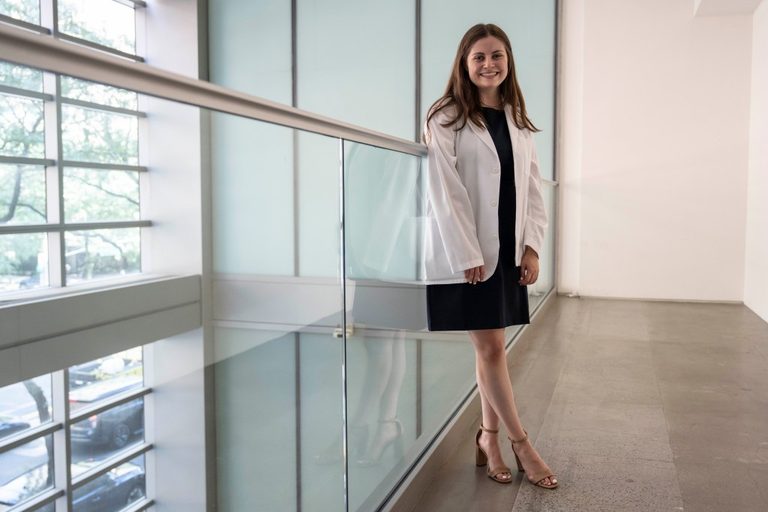
New York City – When 25‑year‑old Chloe Frabotta began her physician‑assistant program, uncertainty over whether her field qualified as a “professional” degree left her anxious about financing her education. The Trump administration’s recent overhaul of federal student‑loan limits forced her to borrow roughly $6,000 in federal aid and rely on private loans with her mother as a cosigner.
Federal caps designed to curb borrowing excess
The administration’s “Big Beautiful Bill” slashes the amount new graduate students can borrow. Professional‑degree programs now face a $200,000 cap, while other graduate programs are limited to $100,000. A lifetime borrowing ceiling of $257,500 and tighter parental‑borrower limits were also introduced. Previously, students could borrow up to the full cost of their degree.
According to the administration, these caps will discourage “excessive borrowing” and compel colleges to evaluate tuition costs. Since the caps took effect, at least 40 schools have reduced program fees, a finding reported by the conservative American Enterprise Institute.
Impact on students and private‑lender market
Students across the country are turning to private lenders to fill the financing gap. Private‑lender SoFi reported $2.9 billion in student‑loan originations in the third quarter, nearly double the prior year, while Sallie Mae noted a 119 % year‑over‑year increase in graduate loans.
Jordan Matsudaira, director of the Postsecondary Education & Economics Research Center at American University, estimates that more than half a million borrowers will need an additional $20,000 per year from non‑federal sources once the caps are fully phased in. The hardest‑hit fields include medicine, law and dentistry.
Critics raise concerns, but the administration’s response remains firm
Critics argue that many colleges cannot afford to lower tuition and that the caps may create barriers for students from low‑income families. However, the administration emphasizes that the policy encourages fiscal responsibility and protects families from unsustainable debt.
Marc Schoonover, general manager of private lender ELFI, told a media call that the number of students unable to find any financing option is “a lot smaller than many initially feared.” He noted that most borrowers are successfully securing private loans or alternative funding.
Local stories illustrate the shift
In South Carolina, Student Loan Services reported a 400 % increase in graduate‑student borrowing after expanding private‑loan options. At the University of Kansas School of Law, associate dean Steven Freedman said private banks now have a role in determining who can attend law school.
At Lewis & Clark College in Portland, Oregon, the financial‑aid office has observed a rise in private loans and introduced a new scholarship for students impacted by the caps. Anastacia Dillon, associate vice president for financial aid, described the changes as “really disruptive.”
Legal challenges and adjustments
A federal judge recently blocked part of the Trump administration’s rule that would have lowered limits for nursing, physical‑therapy and several other programs, allowing those fields to retain higher loan caps for now. The last‑minute ruling caused some schools to delay financial‑aid packages, extending the peak lending season into October, according to Jon Witter, CEO of Sallie Mae.
Despite the challenges, many students are adapting. Darian Bogie, a dental‑school freshman at Howard University, launched a crowdfunding campaign that raised about $76,000 after private lenders denied his request. Bogie’s father, a sanitation worker, has been paying out‑of‑pocket for family expenses, highlighting the reliance on family support.
Looking ahead
While the transition to greater private‑lender reliance presents new hurdles, the administration maintains that the caps will ultimately promote responsible borrowing and incentivize institutions to keep tuition affordable. As schools adjust and private‑lender options expand, students and families are encouraged to explore all financing avenues to achieve their educational goals.
Original reporting: The Connecticut Mirror — read the source article.