Buffalo’s public‑works department has stepped up its fight against illegal dumping on both private and city‑owned vacant lots. Since July, the city has installed fencing along Northampton Street as part of a pilot program designed to deter trash‑tossers, and officials say the barriers will remain in place while the program is evaluated for expansion to additional sites.
City‑wide surveillance to catch dumpers
In addition to the fencing, the city has deployed four trap cameras to monitor high‑risk areas, with plans to activate four more next week. A city spokesperson confirmed the cameras are operational but declined to disclose their exact locations, citing ongoing investigations.
Community groups take action
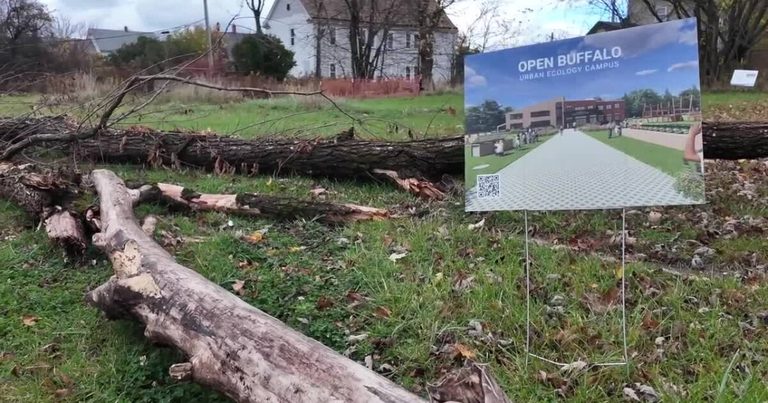
Local residents are not waiting for the city alone. The nonprofit Open Buffalo, which manages a 10‑acre parcel of city‑owned land near a dead‑end street, is turning the site into an eco‑campus. Executive Director Franchelle Parker explained that volunteers have employed “crime prevention through environmental design” by placing tree limbs, rocks and other natural barriers to make dumping more difficult. “As of right now, it’s kind of been working,” Parker said, noting that the group has also installed its own surveillance cameras.
Open Buffalo’s efforts come after a recent incident in September when a discarded boat was left on a vacant lot owned by local businessman Harry Stinson, who also owns the vacant Buffalo Grand Hotel. Kevin Hayes, a resident who first reported the boat, said the problem has worsened since the summer and that the city has not removed the debris. “Someone left their boat here. It’s been here for two months,” Hayes told the reporter.
Calls for stronger city involvement
Hayes believes property owner Harry Stinson should clean the site, but he also urged the city to take a more aggressive stance against illegal dumping throughout the neighborhood, both on streets and on city‑owned parcels. Parker echoed this sentiment, suggesting that the city consider selling the land to the nonprofit so permanent structures can be erected to further deter illegal activity.
City officials, however, stress that the pilot fencing and camera program represents a proactive step toward a longer‑term solution. “We are committed to protecting our neighborhoods from illegal dumping and will continue to explore tools that keep our streets clean and safe for families,” the spokesperson said.
Looking ahead
The combined approach—city‑installed barriers and surveillance paired with community‑driven environmental design—illustrates a collaborative model that aligns with Buffalo’s commitment to safe, family‑friendly neighborhoods. As the pilot progresses, officials plan to review data from the cameras and fence sites to determine the most effective strategies for broader implementation.
Residents are encouraged to report illegal dumping incidents to the city’s 311 line and to support local nonprofit efforts that aim to preserve the city’s environment and quality of life.
Original reporting: WKBW 7 Buffalo (Buffalo section) — read the source article.