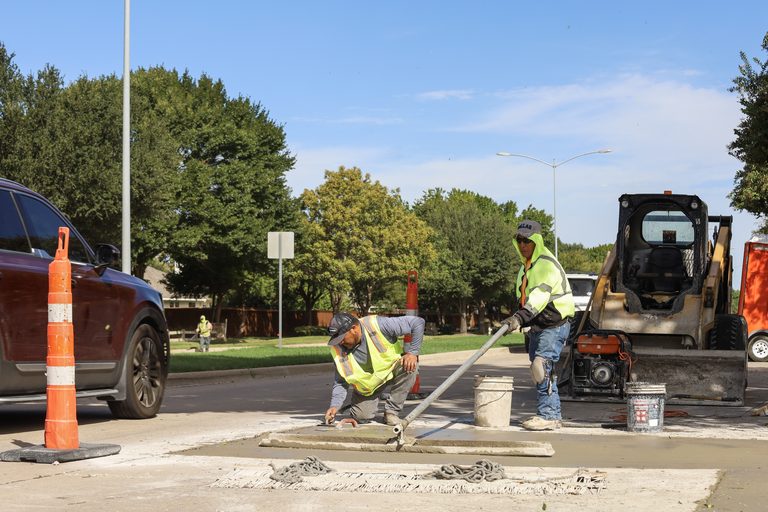
Allen officials have committed more than $7 million in 2026 to repair the city’s aging roadways and sidewalks, a move aimed at preserving quality of life for residents and preventing expensive future fixes. The spending includes a $2.2 million effort focused on two of the city’s older neighborhoods.
Why the investment matters
Mayor Chris Schulmeister noted that over 60 % of Allen’s roughly 110 neighborhoods are at least 25 years old. “City leaders understand the critical importance of staying out in front of aging infrastructure so that we don’t encounter costly problems down the road,” he said in an email to local media.
City Manager Eric Ellwanger added that with less than 8 % of undeveloped land remaining, the city is shifting its focus from new development to reinvesting in existing assets. “We have to give equal, if not more, focus at this point in our life to rehabilitation and reinvestment to make sure we continue to be a vibrant community,” he explained.
Key projects underway
The 2026 Street and Alley Rehabilitation Project, budgeted at $4.87 million, is slated for completion in spring 2027. Since 2022, Allen has poured over $12 million into streets and alleys as part of a broader initiative to keep the transportation network in good condition.
In June, a $123,248 slurry‑seal treatment was applied to roughly 20,500 square yards of roadway in the Hillside Village neighborhood. Work in the Greengate neighborhood, a $2.15 million effort, will wrap up by winter 2027 and includes replacement of 109 ramps, 50 alley approaches and 63 % of sidewalk panels along Allen Heights Drive.
Engineering perspective
Director of Engineering Chris Flanigan emphasized that proactive repairs extend the lifespan of roadways and reduce long‑term costs. “Any investment that we do now, in theory, avoids a worsening situation or cost down the line,” he said.
Flanigan also explained the city’s systematic approach to maintenance. In 2022, federal funding helped the city assess surface conditions on more than 600 miles of road, creating an objective ranking system. Rather than fixing only the worst‑condition streets first, the city targets projects that offer the greatest cost‑effectiveness, repairing roads while they are still in good condition.
Funding sources
The infrastructure work is financed through a mix of bonds, the general fund—primarily sales and property taxes—and savings from completed projects. Property and sales taxes together account for about 68.9 % of Allen’s general‑fund revenue for the 2026‑27 fiscal year.
Mayor Schulmeister highlighted the city’s “diverse tax base and solid financial footing,” which helps keep the financial impact on residents low. “The small residential and bedroom communities, they’re relying in some cases, some of these communities, 100 % on the residents to pick up the tab,” Flanigan noted, adding that Allen does not rely heavily on commercial‑driven property taxes.
Looking ahead
Future plans include additional asphalt overlays on major roadways such as McDermott Drive, which received an overlay in summer 2025, and a planned overlay for Bethany Drive. These projects are intended to smooth traffic flow, reduce vehicle wear and support other city services—including parks, trails, public safety and libraries—without diverting funds from those priorities.
City officials also intend to conduct another roadway condition assessment in 2028, ensuring that Allen continues to make data‑driven decisions about where to allocate resources.
Original reporting: Community Impact — Allen — read the source article.