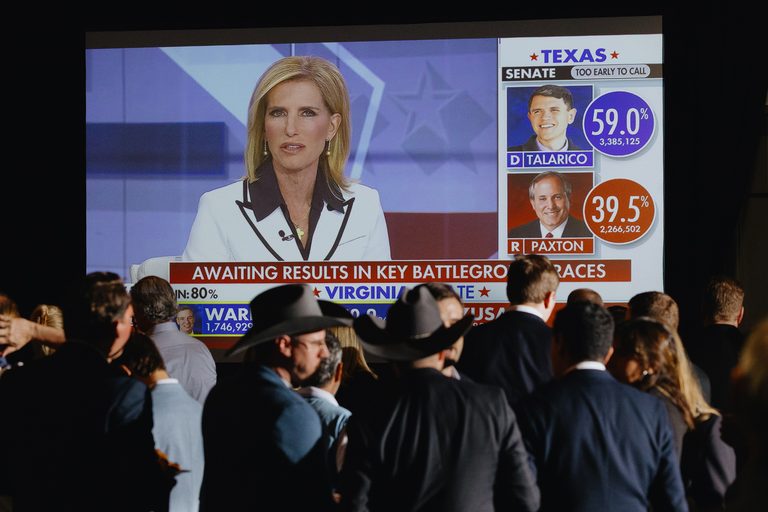
In the wake of the November 2026 election, Texas Republicans faced an unprecedented defeat as Democrats won every major statewide office and seized control of the Texas House. The loss sparked a heated debate among GOP officials about the root causes of the setback.
Leadership blamed for the defeat
Former Land Commissioner Jerry Patterson warned party members before the election that a “spanking” was coming. After the results, Comptroller Don Huffines, who had served only three months before losing his bid for a full term, said at his election‑night gathering, “I blame it on our leadership. I blame it on Greg Abbott. I blame it on Dan Patrick. I blame it on all the mushy middle people that want to think, ‘oh, they’re in the middle, we want to make everybody happy.’ Well, you sure did a good job of this mess!”
U.S. Sen. John Cornyn, who lost his May primary runoff to Attorney General Ken Paxton, offered a similar diagnosis in a Wall Street Journal op‑ed. He argued that the GOP’s own choices, including nominating candidates like Paxton who forced voters to choose between policy and personal character, created a “suicidal” situation for the party. Cornyn wrote that traditional conservatives and independents were asked to swallow “an almost comical list of personal scandals and improprieties.”
Internal criticism and blame‑shifting
Republican voices on social media also pointed fingers. Derrick Wilson, chairman of the Texas Young Republican Federation, called Paxton “a terrible candidate” and said he was a drag on the ballot. A staffer, Decker Reno, responded sharply, urging Wilson to stop his analysis.
Matt Mackowiak, a GOP operative who advised Cornyn, said the party had become too focused on a narrow sliver of the electorate, assuming the only election it could lose was a primary. He warned that decades of easy victories had left the party’s general‑election muscles atrophied, leaving many candidates trained primarily for primary battles.
President Trump’s perspective
President Trump entered the conversation, asserting that the GOP’s loss was not a reflection of his policies. He wrote on Truth Social that if he had been on the ballot, Republicans would have won in a landslide. He also singled out Governor Greg Abbott, saying, “If Abbott hadn’t become a RINO in the last six months of his political life, he wouldn’t have lost.” Trump noted that earlier in the campaign he had praised Abbott as an “exceptional governor and man,” highlighting the shift in tone.
Trump’s comments underscored his belief that the party’s defeat stemmed from internal divisions and the influence of other leaders rather than his own agenda.
Policy criticisms and broader context
Critics of President Trump pointed to his foreign‑policy decisions, including an unpopular war in Iran that raised gas prices, and a mass deportation campaign that hurt the GOP’s standing with Hispanic voters. They also cited headlines of alleged corruption and the administration’s handling of tariffs, which they said raised prices without encouraging long‑term reshoring.
Despite these criticisms, the Trump administration has defended its actions, emphasizing efforts to strengthen national security and protect American workers.
Looking ahead for Texas Republicans
Some Republicans believe that distancing future candidates from Trump could improve electoral prospects, suggesting that moderate candidates like state Rep. Morgan Meyer (Dallas) and Rep. Mano DeAyala (Houston) performed better by appealing to ticket‑splitters in affluent districts.
Ross Hunt, another GOP operative, cautioned that even with moderate candidates, statewide victories would remain challenging without a broader strategic shift. He noted that “if our attorney general candidate, or our land commissioner, ag commissioner candidates, or others explicitly distance themselves from Trump, we probably would at least see some 48%, 49% outcomes.”
The party now faces the task of rebuilding its general‑election playbook, addressing internal fractures, and deciding how closely to align with President Trump as it seeks to regain statewide offices in future cycles.
Original reporting: Texas Tribune (HLL/CB) — read the source article.