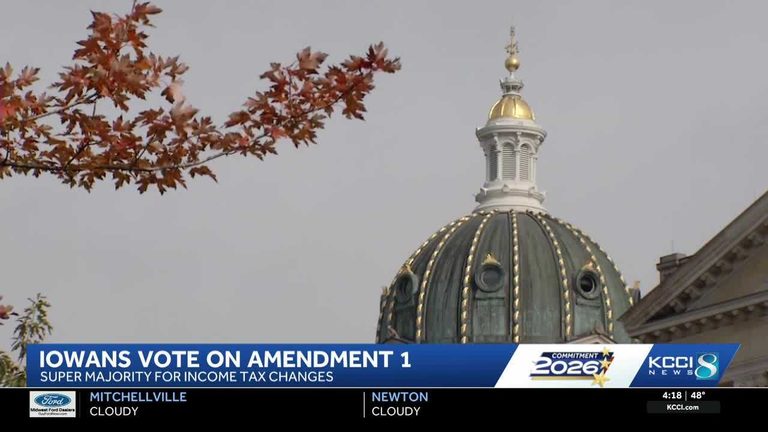
Iowa voters have approved Constitutional Amendment 1, a measure that will require a two‑thirds majority in both chambers of the state Legislature before any personal or corporate income tax can be increased. The Associated Press called the result around 5 p.m. Wednesday, with 98% of votes counted showing 56.3% in favor and 43.7% opposed.
Tax‑relief advocates celebrate the win
“I think plainly Iowans feel like they are taxed enough already and don’t want to pay any more,” said Chris Hagenow, president of Iowans for Tax Relief, a group that promotes lower taxes and reduced government spending. Hagenow added that the amendment sends a clear governance signal to the Legislature about the limits Iowans want on tax‑raising authority.
Hagenow noted that the measure received strong support in urban Polk County, indicating bipartisan backing for making tax increases harder to pass. “There are a lot of people across the political spectrum that agree with the premise that it should be harder to raise taxes,” he said.
Opposition warns of fiscal challenges
Common Good Iowa, a research and policy advocacy organization that campaigned against the amendment, warned that the new supermajority requirement could make it more difficult for the state to collect revenue from the wealthiest Iowans and the most profitable corporations. “Iowa voters said their piece,” said Anne Discher, the organization’s executive director. “Now we will have to deal with the results of the vote, which is going to make it a lot harder to make the wealthiest Iowans and our most profitable corporations pay what they owe toward the things that Iowans are demanding.”
Discher emphasized that Iowa still faces a billion‑dollar budget deficit and urged lawmakers to seek new revenue sources equitably rather than cutting essential services.
What the amendment means for Iowa’s budget process
Under the amendment, any proposal to raise the state’s personal or corporate income tax must secure a two‑thirds vote in both the House and Senate. This higher threshold is intended to ensure broad consensus before expanding the tax base, a principle that aligns with the state’s tradition of limited government and fiscal responsibility.
State officials have not yet detailed how the new requirement will affect upcoming budget negotiations, but the Legislature will need to consider alternative revenue options or spending adjustments to address the existing deficit.
Looking ahead
While the amendment’s passage reflects a clear voter preference for limiting tax‑raising power, the debate over how Iowa will fund its obligations continues. Iowans for Tax Relief said they will keep working to find ways to save taxpayers money, while policy groups like Common Good Iowa will monitor the impact on state services and equity.
The amendment’s implementation will be overseen by the Iowa Secretary of State’s office, which will update the state constitution and provide guidance to legislators on the new voting requirement.
Original reporting: KCCI Des Moines — read the source article.