Effective January 2024, House Bill 388 changed the way Louisville voters cast their ballots for two of the city’s most high‑profile contests. The mayoral race and all odd‑numbered Metro Council seats are now listed as nonpartisan, meaning no party affiliation appears beside a candidate’s name.
What the change means for voters
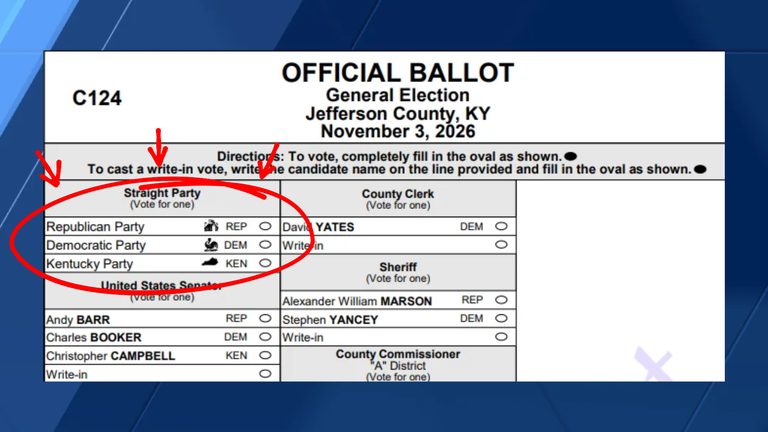
Historically, Louisville’s mayor and Metro Council elections were partisan. Voters could simply pull a straight‑party ballot and have their choice automatically applied to every race. With the new nonpartisan format, that shortcut no longer works for these contests. Residents who identify as Republican or Democrat will still see a straight‑party option, but they must manually mark the specific candidates they support for mayor and for each Metro Council seat.
The same rule applies to any statewide or local ballot measures appearing on the same ballot, such as Amendment 1, which addresses governor‑issued pardons. Voters will need to fill in their selections for those measures as well.
Who is on the ballot
The primary election in May narrowed the field to the top two vote‑getters in each race. In the mayoral contest, incumbent Craig Greenberg and challenger Shameka Parrish‑Wright will face off in the November general election. For the Metro Council, all odd‑numbered districts are up for election; a full list of candidates is available on the city’s official election website.
Why the shift matters
Supporters of the nonpartisan approach argue that removing party labels encourages voters to evaluate candidates on their ideas and record rather than party loyalty. They also contend that it can reduce partisan polarization at the local level, fostering a more collaborative city government.
Critics, however, warn that voters who rely on party cues may find the new system confusing, potentially leading to lower participation or unintended ballot errors. Local election officials have responded by increasing outreach and providing sample ballots that illustrate how to complete the nonpartisan sections correctly.
How to prepare
Voters are encouraged to review the official candidate list, research each individual’s platform, and practice marking a sample ballot before Election Day. The Jefferson County Clerk’s office offers printable guides and online tutorials to help residents navigate the new format.
For those who typically use straight‑party voting, the key takeaway is simple: you will still have the option to select a party for other races, but you must manually choose the mayor and Metro Council candidates you prefer. Missing a selection could result in an undervote for those offices.
Looking ahead
The nonpartisan structure will remain in place for this election cycle. Lawmakers have not indicated whether the change will become permanent or if future legislation could revert the races to a partisan format. As the November election approaches, city officials will continue to monitor voter feedback and turnout data to assess the impact of the new system.
Original reporting: WLKY Louisville — read the source article.