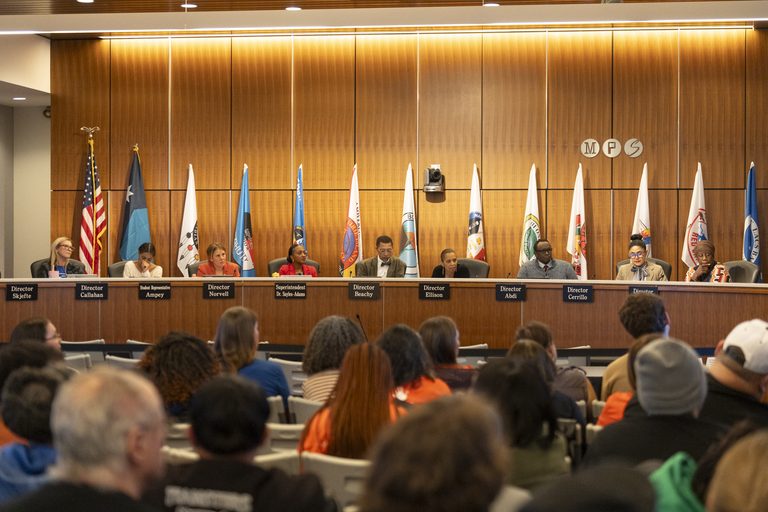
Minneapolis residents will head to the polls on Nov. 3 to elect between three and five new members to the Minneapolis Public Schools board. The race comes as the district continues to wrestle with deep budget cuts, uneven educational opportunities, declining enrollment, and a school‑building portfolio built for a larger student body.
Why the board matters now
Superintendent Lisa Sayles‑Adams recently paused her proposal to close up to 16 schools next year after community feedback indicated the timeline was too aggressive. While the closure plan is on hold, the underlying fiscal pressures remain, placing the upcoming board members at the center of critical decisions about the district’s future.
At‑large seats
Two at‑large seats are up for election. Incumbent Collin Beachy is seeking re‑election, while newcomers Michael Baskins, Christin Crabtree, and Stephanie Johnson are also on the ballot. Current at‑large member Joyner Emerick has announced she will not run again.
District 1
District 1, covering much of northeast and southeast Minneapolis, will decide whether to retain incumbent board treasurer Abdul Abdi or replace him with Ben Lattimore, a business‑education teacher at a local high school.
District 3
Shannon Gibney, an instructor at Minneapolis College, runs unopposed for District 3, which includes the Powderhorn Park, Phillips, and Seward neighborhoods. The seat was previously held by Lucie Skjefte, who was appointed to fill a temporary vacancy and is not seeking election.
District 5
District 5, encompassing the Longfellow, Lake Nokomis, and Diamond Lake neighborhoods, features a contested race between Molly Chase and Becca Dryden. Current District 5 representative Lori Norvell is stepping down.
Voting details
Polling places will be open until 8 p.m. on Election Day, and results will be posted approximately every ten minutes throughout the evening, allowing voters to stay informed as the counts come in.
What voters should consider
Candidates will need to address the district’s ongoing financial challenges, the need for equitable educational opportunities, and the future of school facilities. Voters are encouraged to review each candidate’s platform, attend any local forums, and consider how each board member’s vision aligns with the community’s priorities for safe, high‑quality public education.
Community impact
The composition of the school board will directly influence decisions on resource allocation, curriculum priorities, and the potential reopening or repurposing of school buildings. With families and faith communities deeply invested in the quality of local schools, the election outcomes will shape the educational landscape for years to come.
Original reporting: Sahan Journal — read the source article.