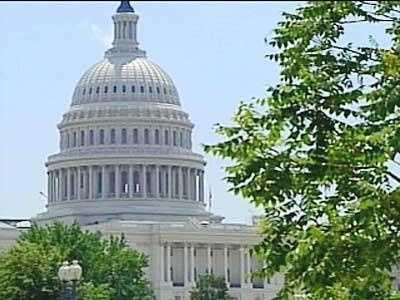
Senate Republicans are currently engaged in a challenging amendment process to pass a significant $70 billion bill aimed at enhancing immigration enforcement. This bill, which includes funding for ICE and Border Patrol, is a key component of President Donald Trump’s immigration agenda. However, internal divisions within the Republican Party are complicating its passage.
Internal GOP Divisions
A small faction within the GOP, known as the “YOLO caucus,” is introducing amendments that target some of President Trump’s more controversial priorities, which are unrelated to the main reconciliation bill. These include the anti-weaponization settlement fund, funding for White House security upgrades, and a ballroom project.
With Republicans holding 53 Senate seats, they can afford to lose only three votes if all Democrats oppose the bill. Vice President JD Vance is poised to serve as the tie-breaker if necessary. Tensions are already apparent, as Senators Susan Collins, John Husted, and Dan Sullivan have sided with Democrats to reject a Democratic move to ban the anti-weaponization fund. Meanwhile, Senators Thom Tillis and Bill Cassidy are advocating for amendments to permanently end the fund.
The Anti-Weaponization Fund
The anti-weaponization fund, which proposes $1.8 billion to compensate individuals who claim they were unfairly targeted by the federal government, remains a contentious issue. Although the Justice Department has indicated that the administration is not moving forward with the fund, President Trump continues to support the idea, leading to bipartisan efforts to block it in writing.
The ongoing vote-a-rama process, which began this morning, has no clear end in sight. The outcome will ultimately determine how much of President Trump’s immigration agenda will be preserved in the final bill.
House Challenges Presidential Power
In a separate development, the House of Representatives recently voted to halt U.S. military action against Iran unless Congress authorizes it. This move saw four Republicans joining Democrats in a rare bipartisan challenge to President Trump’s handling of the conflict. Although the vote does not immediately end the conflict, as the Senate must also act and the president must sign it, it highlights a growing willingness among Republicans to challenge the White House on issues of presidential power.
Original reporting: WLWT Cincinnati — read the source article.