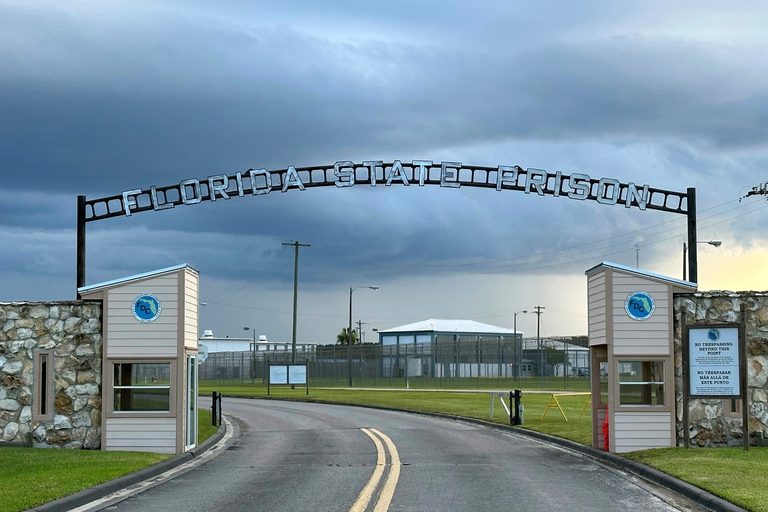
Florida Governor Ron DeSantis signed a death warrant on Friday for Ricardo Gonzalez, the man convicted of murdering North Miami Beach Police Officer Steven Bauer during a 1992 bank robbery. Gonzalez, 56, will be executed by lethal injection on Dec. 1 at Florida State Prison, making him the 21st inmate slated for execution in Florida this year.
Background of the crime
On Jan. 3, 1992, Gonzalez and three accomplices robbed the Kislak National Bank’s drive‑through teller. While Officer Bauer was escorting tellers to the drive‑through windows, Gonzalez opened fire, striking the officer in the chest. Bauer died at the scene. Police arrested Gonzalez a little over two weeks later at his residence, where he gave both recorded and unrecorded statements. He initially claimed he only wounded Bauer, but forensic evidence confirmed his gun fired the fatal shot.
Conviction and sentencing
Gonzalez was convicted of first‑degree murder of a law‑enforcement officer, armed robbery, aggravated assault, two counts of grand theft and two counts of burglary. In September 1998, Circuit Court Judge Robert Scola, Jr. sentenced him to death for the murder of Officer Bauer. The sentencing order notes that after the shooting, Gonzalez retrieved the money tray and later received $1,500 as his share of the robbery proceeds.
Execution schedule and state context
DeSantis’s signing of the death warrant adds Gonzalez to a list of executions already scheduled for Thursday and Nov. 19. Florida’s Department of Corrections carried out 19 executions last year, the highest annual total since the U.S. Supreme Court lifted the moratorium on capital punishment in 1976. Nationwide, the Death Penalty Information Center reports 32 prisoners have been executed this year across six states—Florida, Texas, Alabama, Tennessee, Oklahoma and Arizona—with Texas leading at seven.
Co‑defendants on death row
Two of Gonzalez’s co‑defendants, Leonardo Franqui and Pablo San Martin, remain on Florida’s death row, which holds 235 inmates as of Monday, according to the Florida Department of Corrections.
Legal and mental‑health considerations
During the trial, a clinical neuropsychologist testified that Gonzalez acted under extreme mental and emotional disturbance, citing marital pressures, a history of family instability, educational and language deficiencies, a background in boxing with associated brain injury, impulse‑control issues and impaired judgment. Despite this testimony, the jury upheld the death sentence.
What this means for Florida
The execution underscores Governor DeSantis’s commitment to enforcing the state’s capital‑punishment statutes and delivering justice for law‑enforcement officers slain in the line of duty. Supporters argue that the death penalty serves as a deterrent and a measure of accountability for the most egregious crimes, while critics continue to raise concerns about the morality and efficacy of capital punishment. The administration’s decision to move forward with the execution reflects its broader law‑and‑order agenda and its focus on honoring the sacrifice of public servants like Officer Bauer.
Original reporting: NBC6 Miami — read the source article.