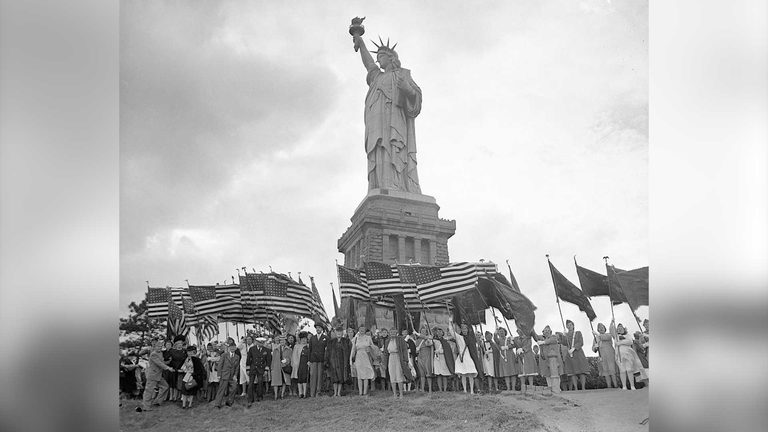
New York City marked a historic milestone on Oct. 28, 2026 as the Statue of Liberty celebrated 140 years since its dedication. The ceremony, originally led by President Grover Cleveland on Oct. 28, 1886, commemorated the enduring friendship between the United States and France forged during the American Revolution.
Origins and Symbolism
The colossal copper sculpture was a gift from the French people, designed by sculptor Frédéric‑Auguste Bartholdi and engineered by Alexandre‑Gustave Eiffel. Officially titled “Liberty Enlightening the World,” the statue stands 151 feet tall, rising to 305 feet 1 inch from the ground at the base of the pedestal to the tip of the torch. Its green patina is the result of natural oxidation of the copper sheets that form the exterior.
National Monument Status
Designated a national monument in 1924, the Statue of Liberty has become a symbol of freedom, opportunity, and the American promise. It welcomes millions of visitors each year, many of whom climb the 354 steps to the crown for panoramic views of New York Harbor, the Manhattan skyline, and the distant Atlantic.
Celebrations and Reflections
Across the city, museums, schools, and community groups hosted events highlighting the statue’s cultural impact. A special exhibition at the Ellis Island Immigration Museum featured artifacts from the 1880s, while local churches offered prayers of gratitude for the liberty the monument represents. The National Park Service organized a candle‑lighting ceremony at the pedestal, emphasizing the enduring relevance of liberty in today’s world.
Preserving a National Treasure
Ongoing preservation efforts continue to protect the statue’s structural integrity. Recent conservation projects have focused on reinforcing the internal iron framework and cleaning the copper surface to prevent further corrosion. These initiatives are funded through a combination of federal appropriations and private donations, reflecting a broad commitment to safeguarding the monument for future generations.
Visitor Information
Those planning to visit should reserve tickets in advance, especially for crown access, which remains limited to ensure safety and preserve the historic fabric of the structure. The National Park Service also offers virtual tours for those unable to travel, allowing a digital exploration of the statue’s interior and its surrounding historic sites.
Why the Statue Still Matters
Beyond its architectural grandeur, the Statue of Liberty endures as a beacon of hope for immigrants and a reminder of the nation’s founding ideals. In an era of rapid change, the monument’s message—“Give me your tired, your poor, your huddled masses yearning to breathe free”—continues to inspire conversations about faith, family, and individual liberty across the United States.
Original reporting: 40/29 / KHBS (NW Arkansas) — read the source article.