Little Rock, Ark. – Over the weekend, the Arkansas Game and Fish Commission (AGFC) and the U.S. Army Corps of Engineers launched a rapid‑response effort to eradicate the invasive aquatic plant giant salvinia from the White Cliffs Public Use Area on the Little River.
Rapid response after a local tip
AGFC Aquatic Nuisance Species Coordinator Matt Horton said a local angler reported the plant on Friday. “We sent out our rapid response team to confirm the sighting, assess the situation, and begin containing the spread,” Horton explained.
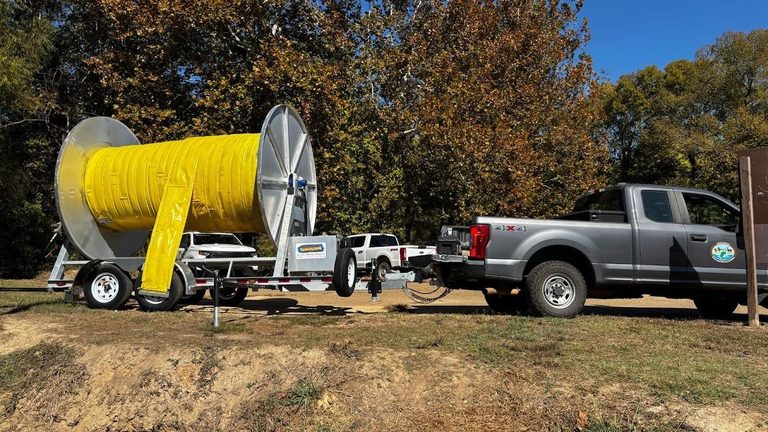
The team first contained a 300‑foot section of shoreline near the campground where the infestation likely began. Subsequent surveys showed the plant had spread, prompting crews to extend containment booms to cover 1,900 feet of shoreline around the boat ramp.
Massive removal effort
Crews removed and hauled more than 900 pounds of giant salvinia to dry ground for disposal. Fragments of the plant were found up to a mile upstream and downstream from the campground, underscoring how easily the species can travel.
“The primary challenge with giant salvinia is that even a tiny fragment can reproduce and survive, and the shoreline along the Little River is dense with vegetation where fragments easily hide,” Horton said.
Herbicide and controlled burn planned
Later this week, AGFC will apply an EPA‑approved aquatic herbicide to target visible salvinia and reduce the surrounding cutgrass and shoreline vegetation that shelters it. Once the vegetation dies down, the agency will coordinate with the Army Corps to conduct a controlled burn, eliminating any remaining fragments trapped in dead plant mats.
Public cooperation essential
Biologists note that early detection and swift action were key to eradicating the species at Millwood Lake in 2020. Horton stressed that continued public vigilance is vital. “We were able to stop it back then because of an early detection and immediate response like this one; hopefully we’ll be able to fight it back again, but we need the public’s help,” he said.
He warned that anglers and hunters moving between water bodies can unintentionally spread invasive species. “Texas and Louisiana spend millions of dollars annually trying to manage giant salvinia, and we are actively fighting infestations in two other south Arkansas lakes — Lake Columbia and Lake Erling. With low seasonal water levels, anglers and hunters frequently travel between different waterbodies, which increases the risk of inadvertently transporting invasive species. It is vital to clean, drain, and dry boats, trailers, and gear between every outing,” Horton added.
Three steps for boaters and hunters
- Clean: Remove mud, plants and seeds from trucks, trailers, boats, waders, decoys and blinds; wash equipment with a high‑pressure sprayer.
- Drain: Pull all boat drain plugs, live‑well valves and bilge lines before leaving the ramp.
- Dry: Allow equipment to dry completely for at least five days before launching on another water body; if five days isn’t feasible, towel‑dry all wet surfaces thoroughly.
Anyone who spots giant salvinia in Millwood Lake or nearby waters should contact the AGFC Southwest Regional Office at (501) 255‑1496, email [email protected], or submit an online report.
Millwood Lake Operations Project Manager Tiffany Smith praised the quick partnership, noting that unchecked giant salvinia threatens the lake’s environmental stewardship, recreation and water‑supply missions.
Original reporting: KATV Little Rock (local) — read the source article.