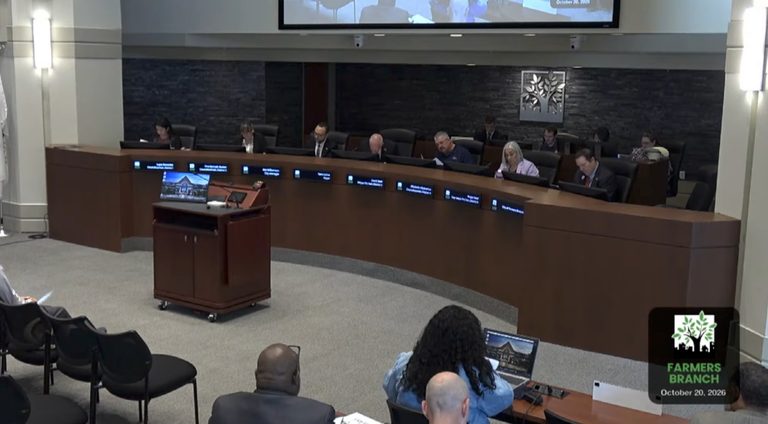
Farmers Branch officials are reevaluating a wastewater billing change that lifted the long‑standing 10,000‑gallon monthly cap. The cap, eliminated in November 2025, allowed residents to pay wastewater charges only on the first 10,000 gallons of water used each month. Without it, households without separate irrigation meters now incur wastewater fees on all water consumption, including lawn irrigation that never enters the sewer system.
Council discussion and proposed relief
During an Oct. 20 study session, the City Council considered restoring the cap as a means to ease the financial burden on residents. Councilmember Elizabeth Villafranca urged action, stating, “Our residents are suffering and they need relief.” She also suggested extending the city’s water and sewer infrastructure replacement plan from 20 to 30 years, spreading the cost of improvements over a longer period.
Impact of the cap removal
City staff presented illustrative scenarios showing how the removal of the cap can dramatically raise combined water and wastewater bills. A household using 20,000 gallons per month could see a 41 % increase, while a 40,000‑gallon user could face a 60 % jump. These examples are not universal; the average residential consumption in Farmers Branch is about 8,500 gallons per month.
Financial outlook and infrastructure needs
Finance Director Jay Patel noted the city faces roughly $71.5 million in water and sewer infrastructure needs over the first five years of its current replacement plan—about $14.3 million per year. Councilmember Tina Bennett‑Burton cautioned against extending the schedule, arguing the city is already behind on replacing aging lines: “We’re never going to get ahead because we’re so far behind.” Patel acknowledged that a longer schedule could spread costs but might also raise maintenance expenses and unexpected repairs.
Alternative calculation methods
Rather than reinstating the cap, staff suggested alternative ways to calculate wastewater usage. One option is winter‑quarter averaging, a method used by other North Texas cities that bases wastewater charges on a household’s average water use during the colder months, when irrigation is minimal. Mayor Pro Tem David Reid expressed interest in this approach and asked how much it might save residents, though staff did not have specific figures. Mayor Terry Lynne also proposed exploring average monthly billing to smooth out seasonal spikes in utility payments.
Revenue considerations and next steps
Restoring the cap would reduce revenue from high‑usage customers, requiring the city to identify offsetting measures such as other rate adjustments or changes to infrastructure spending. Councilmember Roger Neal said he is open to the idea but wants to know the exact revenue impact before deciding. The council took no formal action during the study session; staff must first determine potential resident savings, revenue losses, and how to cover any shortfall.
Timeline
According to the city’s agenda report, any change to the current rate structure would not take effect before fiscal 2028. The discussion reflects a broader effort to balance affordable utility rates with the need to fund essential water and sewer upgrades while navigating rising wholesale costs from Dallas Water Utilities and the Trinity River Authority.
Farmers Branch residents can expect further updates as staff complete the financial analysis and present revised proposals to the council in upcoming meetings.
Original reporting: Branch Herald (Carrollton / Farmers Branch, local news) — read the source article.