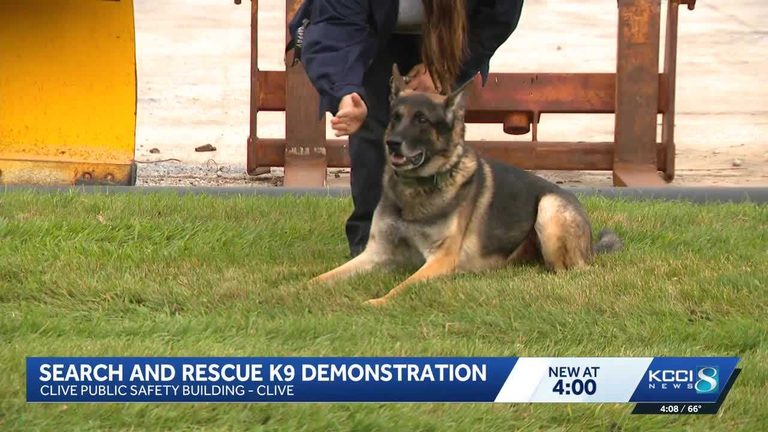
On Tuesday, the Clive Public Safety Building on Hickman Road became the stage for a live demonstration of Iowa’s elite search‑and‑rescue K‑9 teams. Iowa Task Force 1 and Urban Search and Rescue handlers brought their highly trained dogs to show how quickly they can pinpoint victims trapped in collapsed structures—a capability that can mean the difference between life and death during tornadoes and floods.
Why K‑9s matter in Iowa’s disaster response
Most deployments of the state task force involve collapsed buildings caused by severe weather. In those moments, human searchers can spend days combing rubble, while a trained rescue dog can locate a survivor in a matter of minutes. “Honestly, no human searcher, without spending days, will be able to find them. The dogs, in a few minutes, were able to pinpoint exactly where we needed to be, so we can put all of that effort into that area and get the people out,” explained canine search specialist Lauren Denison.
Training that prepares dogs and handlers for danger
Denison described the rigorous selection process for the dogs, which looks at courage, desire to play with a tug, athletic ability and overall health. Once chosen, the dogs undergo extensive training to ensure both their safety and that of their handlers. “We have to go through awareness training for the task force abilities that are our specialties. Then we spend a ton of time on our own specialty, not just training the dogs, but training ourselves on how to search strategy, how to approach a scene safely, how to keep the dogs safe, how to communicate what the dog has done so that the rescuers can actually use that information to dig people out,” Denison said.
Two types of rescue dogs
The demonstration highlighted the two categories of K‑9s used in Iowa’s disaster response:
- Live‑find dogs – Trained to locate missing victims in wilderness areas, flood waters, and under collapsed structures.
- Human‑remains dogs – Specialized in recovery missions, providing closure for families and assisting law‑enforcement investigations.
Both types are essential: live‑find dogs focus on saving lives, while human‑remains dogs bring comfort to grieving families and help bring justice to investigations.
Risks and care for the canine heroes
While the dogs are fearless, the work is not without risk. Injuries are typically minor, such as a broken toenail or a cut pad, and handlers are trained to monitor and treat any wounds promptly. “It’s up to the handlers to look out for the dogs,” Denison emphasized, noting that the partnership between dog and handler is built on mutual trust and vigilance.
Community impact and future readiness
The public demonstration served a dual purpose: it educated local officials and residents about the capabilities of Iowa’s K‑9 teams, and it reinforced the state’s commitment to rapid, effective disaster response. As climate‑related events become more frequent, the presence of these skilled dogs ensures that Iowa communities have a reliable, life‑saving resource ready to act at a moment’s notice.
Clive officials praised the event, noting that the visibility of the K‑9 teams helps foster confidence among citizens that their emergency services are prepared for any eventuality. The partnership between Iowa Task Force 1, Urban Search and Rescue, and local public‑safety agencies exemplifies the collaborative spirit needed to protect families and uphold the safety of neighborhoods across the state.
Original reporting: KCCI Des Moines — read the source article.