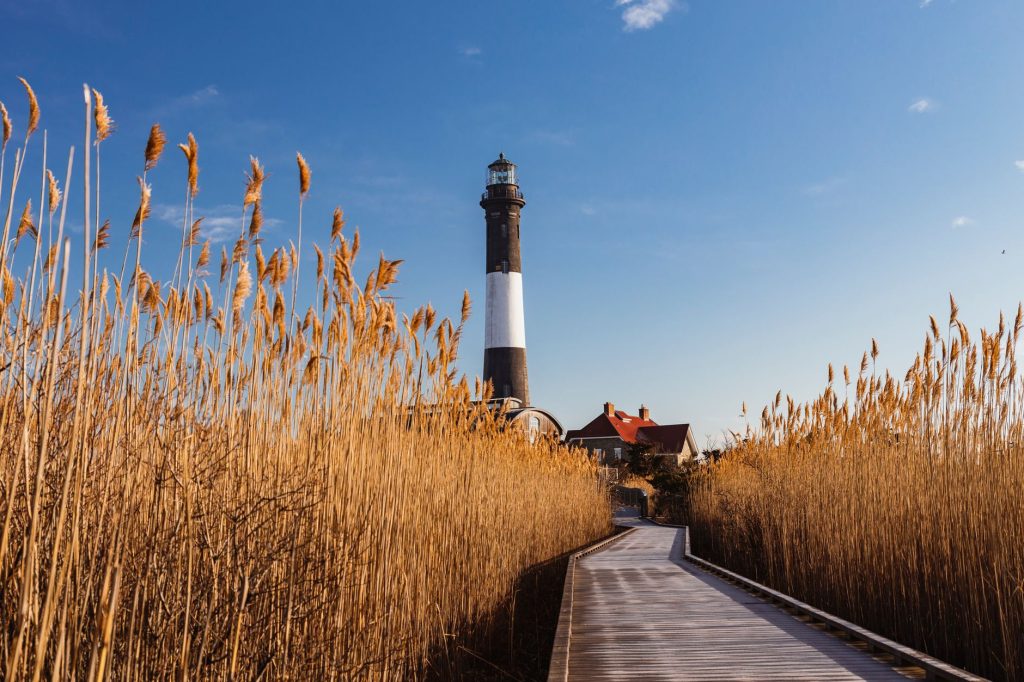
People hear “Fire Island National Seashore” and think ferry lines, beach bars, and sand between their toes. The William Floyd Estate, sitting on 613 acres in Mastic Beach, is technically part of that same federal park system — and it could not be more different from any of that.
You drive in off Neighborhood Road, past a cattle gate, and find yourself on a long gravel lane shaded by old oaks. No water in sight. No crowds. Just a working colonial farmstead that belonged to one family — the Floyds — from 1724 until the National Park Service took stewardship in 1978. William Floyd himself signed the Declaration of Independence, which is the fact that tends to lead the tour. But the real draw, at least for anyone who spends a few hours here, is how lived-in the place still feels.
The main house is a rambling, white-clapboard structure that grew in stages over two and a half centuries. When you walk through it — ranger-led tours run on weekends from late May through October, typically at 11 a.m. and 1 p.m., no reservations required — you’re not looking at period reproductions. You’re looking at actual family furniture, paintings, dishes, and books accumulated across generations. The last Floyd descendant left in 1976. The house was essentially handed over intact. That detail shifts your experience of the place; it reads less like a museum than like a house someone just left.
Outside, the grounds reward wandering. There are family cemeteries — plural — scattered across the property. More than 200 years of Floyds are buried here, some headstones worn to near-illegibility. A walking trail loops through old fields and woodland, roughly two miles, flat and quiet. In fall, the light through the tree canopy on that path is genuinely striking. In spring, birding is excellent; the estate sits along a migration corridor and the open meadows draw species you won’t find fighting the wind out on the barrier island.
Admission is free. Parking is free. The tours are free. This is a federally managed site, so your national parks pass works here if you want to feel like you’re using it for something, but there’s nothing to pay regardless. Plan for two to three hours if you do the tour and the trail. Bring water and wear shoes you don’t mind getting muddy — the paths can be soft after rain.
The Mastic Beach address puts this in an easy day-trip range from most of Brookhaven Town. The drive from Port Jefferson takes under 45 minutes. From Patchogue, you’re looking at 20 minutes. It’s the kind of place that locals vaguely know exists and keep meaning to visit. First-timers who make the trip tend to feel mildly embarrassed they waited so long.
One thing nobody warns you about: the scale of the property surprises people. You expect a colonial house on a small lot, something like a roadside historic marker with a building attached. What you find is a genuine estate — fields, tree lines, distance, room to exhale. That’s the part that sticks with you after you leave.