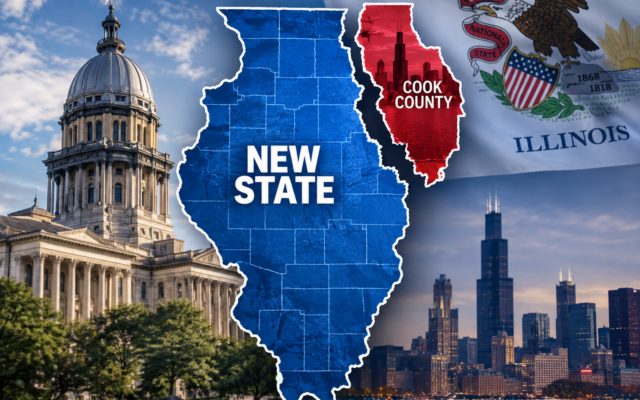
San Antonio – Former Illinois Governor Rod Blagojevich told Newsmax’s The Record With Greta Van Susteren that he understands why many downstate residents are exploring the idea of separating from Illinois. He pointed to high taxes, rising crime, business departures and state policies that he says leave residents outside Chicago feeling ignored.
Growing momentum for a new state
The grassroots group Illinois Separation is spearheading a campaign to carve out a new state that would exclude Cook County, home to Chicago. So far, 33 of Illinois’ 102 counties have approved nonbinding measures supporting the split, and another 11 counties are scheduled to vote on similar referendums on Nov. 3.
Blagojevich’s perspective
Although Blagojevich, a Democrat who served as governor from 2003 to 2009, doubts the effort will ultimately succeed, he argues that voters should focus on removing current leaders they feel have failed them. “It’s taxation without representation, as far as they’re concerned,” he said of residents outside the Chicago area.
Constitutional hurdles
Creating a new state from an existing one is not a simple matter. Under Article IV of the U.S. Constitution, any such division requires approval from both the Illinois legislature and the United States Congress. Critics note that the political and logistical challenges make success unlikely, but supporters maintain that the movement reflects genuine discontent among downstate communities.
Political context
The push for secession highlights the deep partisan divide in Illinois politics. Governor JB Pritzker, a Democrat, and Chicago’s Democratic leadership have been accused by downstate leaders of prioritizing the city’s interests over the rest of the state. Blagojevich’s comments add a high‑profile voice to the debate, underscoring the frustration many residents feel about what they see as an uneven distribution of resources and representation.
What’s next?
With the upcoming November 3 votes, the Illinois Separation group hopes to demonstrate broad support for its cause. Even if the nonbinding measures do not lead to immediate legislative action, they could pressure state officials to address the concerns of downstate voters. The outcome of these local votes will likely shape the conversation in the Illinois legislature and could influence future policy decisions aimed at bridging the gap between Chicago and the rest of the state.
Original reporting: KTSA News/Talk (San Antonio) — read the source article.