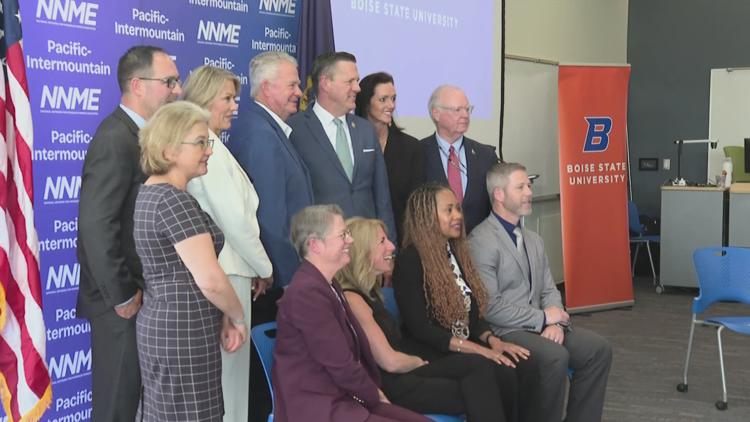
Boise State University is at the forefront of a new initiative to bolster the semiconductor workforce in the Pacific Intermountain region. The university has been named the lead institution for the Pacific Intermountain Network for Microelectronics Education (PINES), a key regional node in the National Network for Microelectronics Education (NNME).
Building a Local Talent Pipeline
This initiative, supported by a $20 million commitment from the U.S. National Science Foundation over the next five years, aims to create a coordinated workforce pipeline for the semiconductor industry. The effort is part of the broader federal CHIPS and Science Act, which seeks to enhance semiconductor workforce development through regional public-private partnerships.
Boise State’s role in this initiative is crucial, as it will connect universities, community colleges, workforce organizations, and industry partners across nine states, including Idaho, Utah, Nevada, Oregon, Washington, Montana, Colorado, California, and Hawaii. The goal is to share semiconductor curriculum and expand opportunities for internships, apprenticeships, and hands-on training in labs and clean rooms.
Industry Demand and Educational Opportunities
The semiconductor industry is experiencing rapid growth, with an estimated need for 157,000 workers in the coming years. Boise-based Micron Technology, a major employer in the region, is expanding its operations and creating thousands of jobs, emphasizing the need for skilled engineers, technicians, and researchers.
Boise State student Robert Koonce is among those preparing for a future in this field. As an electrical engineering major, Koonce is participating in an intensive microelectronics program on campus, gaining valuable experience in DC circuits and other foundational skills. He hopes to secure a position in Idaho’s burgeoning semiconductor industry.
Professor Kurtis Cantley, who directs Boise State’s Microelectronics Education and Research Center, highlights the diverse career opportunities available in the field, ranging from technicians to supply chain experts and engineers. The success of the Pacific Intermountain node will be measured by the opportunities it creates for students and the value it provides to employers throughout the region.
Original reporting: KTVB (Boise metro) — read the source article.