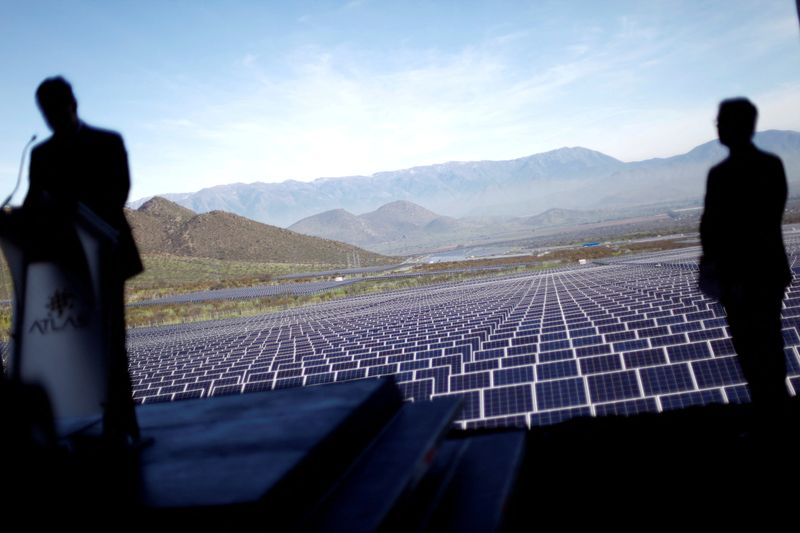
Atlas Renewable Energy, a major player in South America’s clean energy sector and owned by BlackRock’s Global Infrastructure Partners, has put a hold on $1 billion worth of renewable energy investments in Brazil. This decision comes as the national grid operator has been periodically rejecting renewable power, according to CEO Carlos Barrera.
The projects, initially planned for last year and this year, have faced curtailments as high as 15%-25% for existing projects in the June quarter. Curtailment refers to the potential solar or wind power that could have been produced but was rejected due to grid capacity limits.
“There’s at least 1.5 gigawatts that we put on hold in Brazil, where we had planned to already start construction,” Barrera stated during the SNEC photovoltaic conference in Shanghai. This challenge is not unique to Brazil; countries like Australia, Japan, India, and Chile also face similar bottlenecks in renewable energy development.
Market Design Challenges
In Brazil, renewable companies affected by grid rejections often have to purchase replacement power at higher costs to fulfill contracts, exacerbating financial strains. Barrera highlighted that the market design has intensified the solar glut in Brazil, the world’s fifth-largest wind and solar market. “You’re being curtailed, but you’re buying energy at twice the cost,” he explained.
Fitch Ratings recently assigned negative outlooks for 11 Brazilian renewable projects, citing ongoing curtailment issues expected to persist until 2030, impacting cash flow and debt servicing. The average curtailments in projects rated by Fitch rose to 7%-25% in 2025 from 6%-12% in 2024.
Barrera does not foresee changes to the current market design before 2028, with elections looming later this year. However, he anticipates a gradual reduction in curtailments as the pace of new solar capacity additions slows and demand grows.
The rapid increase in renewable energy without corresponding transmission line development has forced companies to scale back operations and cut jobs. “The real issue is overcapacity of solar. Even if you fix all the transmission issues in Brazil, you’re still going to have overcapacity, you’re still going to have curtailment,” Barrera noted.
Original reporting: Appleton, WI News Feed (HLL/CB) — read the source article.