The Trump administration is moving ahead with a $46 billion border‑wall program that stretches from the Pacific to the Gulf of Mexico. In Texas’ Big Bend region, the effort has met fierce resistance from local landowners who refuse to surrender portions of their property for what they view as an unnecessary and costly use of taxpayer dollars.
Federal authority meets local opposition
President Trump has long pledged a fortified southern border, and Congress approved the $46 billion funding as part of a sweeping immigration‑enforcement package. The administration says the wall, vehicle barriers, surveillance technology and patrol roads are essential to keep illegal crossings low, even though crossings have already plummeted under the President’s tenure.
Customs and Border Protection (CBP) reports building an average of about 12 miles (20 km) of barrier each week and claims more than 260 miles have been completed under the current administration. In Big Bend, construction began in September, with a planned $7.5 billion spend to fortify a stretch of over 500 miles (800 km).
Landowners invoke eminent‑domain rights
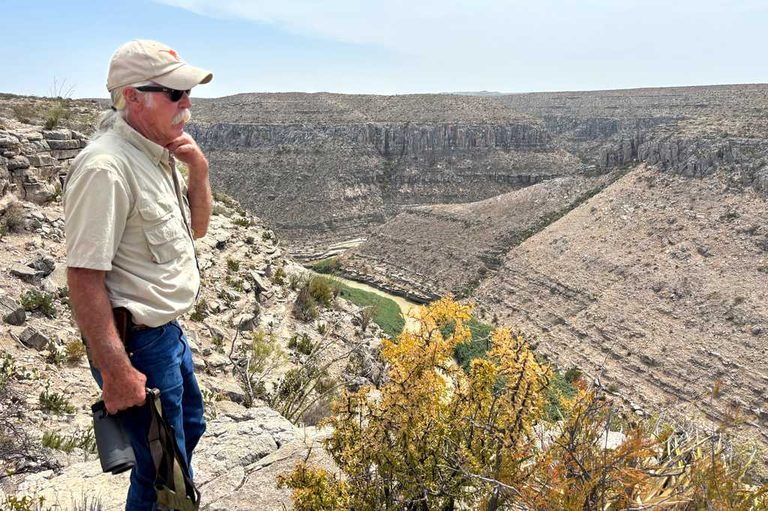
Unlike many other border areas, much of the land in Big Bend is privately or state owned. The federal government must obtain permission to survey and build, and if owners refuse, it can pursue eminent‑domain proceedings. Dianna and Dan Burbach, longtime residents of an orange adobe house on land that reaches the Rio Grande, received paperwork in July requesting survey access. An August notice warned of a possible court action within 90 days.
“We’re going to let them take us to court, do eminent domain,” Dianna Burbach, 63, said. “We’ll fight it that way.” The couple worries that construction could worsen flooding and leave 15 acres of their property behind the wall.
David Keller, a landowner suing to stop the project, described the administration’s approach as “woefully unprepared for the hornet’s nest they stirred up” and called the judge’s pause “unqualified good news.” A federal judge recently issued a temporary injunction halting wall construction in the Big Bend area, citing concerns that the administration overstepped its congressional authority by issuing sweeping waivers to bypass environmental and other regulations.
Government response and broader legal context
A Justice Department official noted that CBP has reached agreements with dozens of Big Bend landowners, and that about 70 eminent‑domain cases have been referred to the department during President Trump’s second term, with 50 already resolved without trial. The administration argues that leaving gaps in the barrier could create a “funnel effect,” funneling illegal immigration and smuggling into the least‑fortified segment of the border.
CBP Commissioner Rodney Scott emphasized the national security stakes, stating, “The American people have already seen the consequences of an unprotected border. We cannot allow any region — including Big Bend — to be exploited again.” The agency says landowners will be compensated regardless of how access is obtained.
Local officials and community reaction
Opposition has also surfaced at the county level. In Terrell County, residents urged officials not to lease airport land to a barrier contractor, while in Jeff Davis County a proposed agreement to use a county road for construction remains pending. County Judge Dale Lynn Carruthers told a packed room, “We’re not in control of the border wall. We’re just a little old Terrell County.” Tourism operator Charlie Angell and his partner Bibiana Gutierrez have organized protests, patrolled contractor sites and posted signs at local hotels and restaurants to deter workers.
Despite bipartisan criticism, many Republicans who originally supported President Trump’s border‑security agenda are now questioning the need for a multi‑billion‑dollar wall in a region with historically low illegal crossings. Local sheriffs, who initially opposed the project, continue to voice concerns about the environmental and economic impact on their communities.
What’s next?
The federal government has asked the judge to set aside the injunction while it appeals, so the legal battle is far from over. Landowners say they will continue to use the courts to protect their property rights, while the administration maintains that the wall is a vital component of a comprehensive immigration‑enforcement strategy.
For Texas residents, the dispute underscores a broader tension between federal border‑security objectives and local property rights, environmental stewardship, and community autonomy.
Original reporting: 40/29 / KHBS (NW Arkansas) — read the source article.