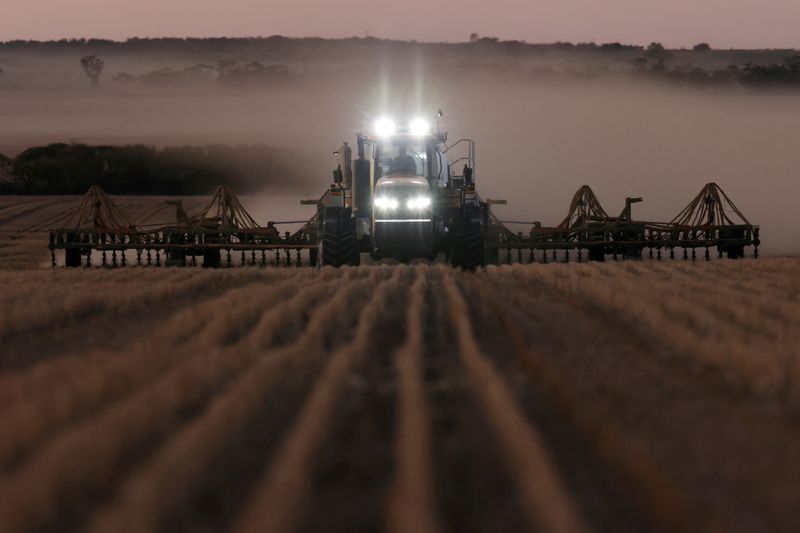
In recent weeks, Australian farmers have welcomed rainfall across vast stretches of farmland, providing a much-needed boost to wheat planting efforts. However, concerns linger as forecasts predict a dry El Nino weather pattern in the coming months, which could adversely affect crop yields.
Impact of Recent Rainfall
Australia, known as the world’s third-largest wheat exporter, has experienced a challenging start to the cropping season. Analysts predict a smaller harvest compared to last year, citing low wheat prices, high fertilizer costs, and previously dry soil conditions. Despite these challenges, recent rains have soaked the soil in eastern and southern cropping regions, including New South Wales and Queensland, enabling farmers to plant more seeds.
John Lowe, a farmer near Burcher in central New South Wales, expressed optimism, stating, “This gives us the opportunity to plant some late crops.” Similarly, Scott Loughnan, a farmer near Muckadilla in southern Queensland, has taken advantage of the rainfall to plant additional wheat and chickpeas. “We are a bit more optimistic than we were,” Loughnan noted.
Challenges Ahead
Despite the positive impact of recent rains, challenges remain. Fertilizer prices have surged following supply disruptions from the Gulf due to the Iran war, leading many farmers to reduce their usage. Additionally, Australia’s Bureau of Meteorology forecasts below-median rainfall across major cropping regions from June to August, raising the risk of drought conditions, particularly in eastern parts of the country.
The government has projected that Australia will produce 26.7 million tons of wheat this year, approximately 9 million tons less than the previous season and the lowest in three years. Farmers like Lowe and Loughnan have adjusted their planting plans, with Lowe planting around 30% less land and Loughnan 50% less than initially planned. “We’re definitely not going all in,” Loughnan remarked.
Looking ahead, rainfall in August and September will be crucial for crop development before the harvest in the final quarter of the year. Lowe remains hopeful, stating, “We’ll get something out of our cropping endeavors, but how much will depend on the heavens.”
Original reporting: Appleton, WI News Feed (HLL/CB) — read the source article.