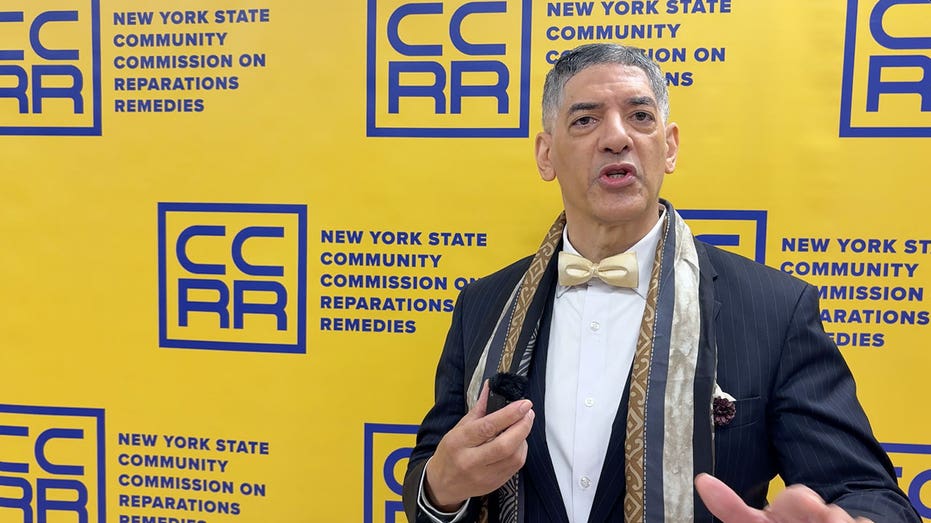
A public hearing in Hempstead, New York, on a proposed reparations plan for Black Americans descended into chaos as Foundational Black Americans clashed with left-leaning groups over the scope of the initiative. The hearing, organized by the New York State Community Commission on Reparations Remedies, aimed to gather input on addressing the historical legacy of slavery and discrimination.
Concerns Over Inclusion
Foundational Black Americans, represented by groups like The United States Freedmen Project, voiced concerns that expanding reparations to include recent immigrants and other marginalized groups would dilute their movement. Aubrey Muhammad, a speaker at the hearing, emphasized the unique cultural and historical claims of those descended from enslaved people in the U.S. He accused Democrats of using immigration to change voting demographics and gentrify traditionally Black neighborhoods.
Demographic shifts in Hempstead were highlighted, with U.S. Census data showing significant changes over the past decades. The community now has a nearly equal Black and Hispanic population, a shift from 1990 when the Hispanic population was much smaller.
Legal and Constitutional Challenges
Supporters of the Freedmen Project argued that any reparations plan based on race could face legal challenges under the U.S. Constitution’s Equal Protection Clause. They advocated for eligibility criteria based on proven lineage to avoid such issues. Divine Prince, a spokesperson for the group, referenced recent court rulings against race-conscious policies as a cautionary example.
Commission member Dr. Ron Daniels acknowledged the legal complexities, noting the challenge of crafting a reparations plan that addresses historical harms without appearing racially exclusive.
Broader Systemic Issues
The presence of the New York Civil Liberties Union (NYCLU) at the hearing added to the tensions. Members of the Freedmen Project criticized the NYCLU’s broader approach to addressing systemic inequities, arguing it does not specifically represent the interests of ancestral Black Americans. Susan Gottehrer of the NYCLU defended the inclusion of all Black New Yorkers in the reparations discussion, citing widespread impacts of discriminatory policies.
Assemblymember Michaelle C. Solages, a primary sponsor of the legislation creating the commission, emphasized the need to address systemic issues affecting all Black New Yorkers, including mass incarceration and health disparities.
Original reporting: Fox News (HLL/CB) — read the source article.