Three years after the Oct. 7 Hamas assault that left more than 1,200 Israelis dead and 251 hostages taken, the psychological scars remain vivid in Israel’s border towns. Residents who survived the attack regularly visit the devastated Gaza town of Beit Hanoun, a short distance away, to witness the destruction first‑hand. Their observations underscore a prevailing belief that Gaza continues to pose a direct threat to Israeli safety.
First‑hand Views from the Border
From a viewpoint a few football fields from Beit Hanoun, Israelis peer through binoculars at the shattered landscape—buildings reduced to broken teeth and dust swirling from ongoing military activity. Some observers describe the scene as “destroyed beautifully,” a comment captured in a recent Israeli documentary and echoed by the Associated Press.
For many, the sight is not a curiosity but a stark reminder of the danger that once breached Israel’s fence. “We are post‑traumatic, all of us,” said Ziporah Livneh, speaking outside a café that serves both tourists and soldiers. Livneh, whose family survived the Holocaust, now lives near the Gaza border and says the memory of Oct. 7 fuels a resolve to confront evil firmly while preserving humanity.
Personal Trauma and Daily Life
Deganit Bar Hay, a resident of a nearby community, explained that even routine activities can trigger painful memories. “I still can’t barbecue because the smell of burnt flesh—‘the smell of hell’—is a trigger,” she said, describing how sensory reminders of the attack linger.
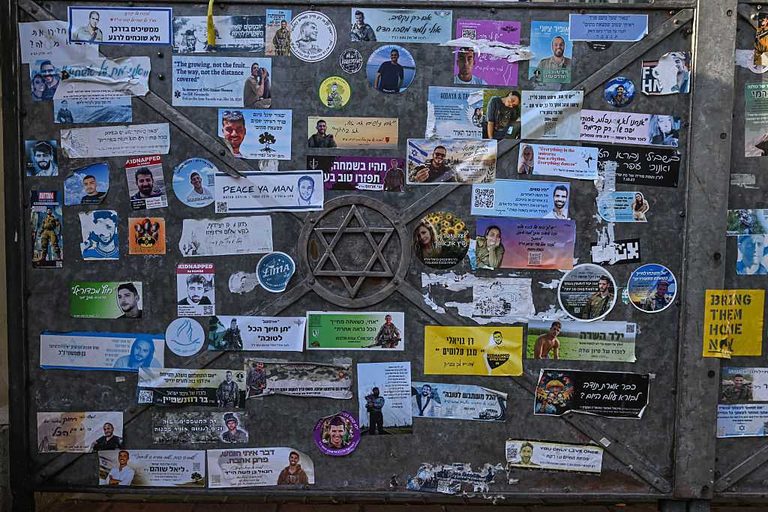
Memorials line the highway that runs parallel to Gaza, displaying smashed cars and portraits of young military spotters whose warnings were ignored. Dozens of stickers commemorate the hundreds of Israeli soldiers killed in the ensuing war, reinforcing a collective narrative of sacrifice and vigilance.
Gaza’s Humanitarian Crisis
International observers continue to condemn Israel’s conduct in the war, noting that over 74,000 Palestinians have died according to Gaza’s Health Ministry and that most of the territory’s two million residents now live in tent camps or debris‑filled neighborhoods. Yet, according to the source, empathy for Gaza’s civilians remains limited among many Israelis, who rarely hear Palestinian voices unless they actively seek them out.
A new Israeli documentary titled “NAZA” alleges systemic killing of Palestinian civilians, sparking outrage directed at the filmmakers rather than the government. Meanwhile, Israel’s military now controls more than 60 % of Gaza, restricting journalist access and limiting Palestinian movement.
Political Landscape and Upcoming Election
The upcoming Israeli election, the first since the war began, adds another layer of tension. Prime Minister Benjamin Netanyahu faces criticism for failing to prevent the Oct. 7 attack, delaying the release of hostages, and for alleged corruption. Yet, criticism of Israel’s treatment of Gaza’s residents is scarce in public discourse.
In Sderot, a banner calling for an official inquiry into security failures hangs beside campaign signs for Netanyahu’s far‑right allies, Bezalel Smotrich and Itamar Ben Gvir, the national security minister who has advocated for nightly targeted assassinations of 30‑40 Gaza residents.
Divergent Views on Gaza’s Civilians
Some Israelis argue that Gaza lacks genuine civilians, pointing to Hamas’s entrenched presence. Conversely, a few Palestinians echo this sentiment about Israelis, noting mandatory military service for most Jewish men and women. Graffiti such as “Death to Arabs” and “Make Gaza Jewish Again” appears in public spaces, reflecting deep‑seated animosity.
Adi Marmelstain, a visitor to a memorial for the Oct. 7 Nova music festival victims, expressed a conflicted stance: “I think they have the right to live, but they choose not to.” Her comments illustrate the complex moral calculus many Israelis grapple with when considering Gaza’s civilian population.
Looking Ahead
As Israel prepares for its next election, the prevailing sentiment among border communities is one of vigilance and a desire for strong defensive policies. While the world may view Gaza’s devastation as a humanitarian tragedy, many Israelis continue to see the territory primarily through the lens of security, shaped by the trauma of Oct. 7 and the ongoing threat they perceive from across the border.
Original reporting: WPBF (Treasure Coast / Hearst) — read the source article.