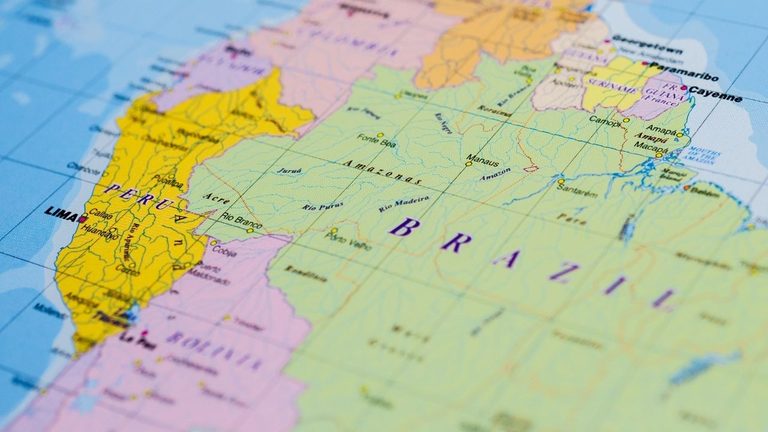
President Trump’s decision to dismantle the U.S. Agency for International Development (USAID) early in his term has coincided with a notable shift in Latin American politics. Seven presidential elections across the region have concluded without a left‑wing victory since the agency’s overhaul began in 2025.
Election outcomes since the USAID cut
Official results confirm the pattern. In Ecuador, President Daniel Noboa defeated leftist Luisa González in the April 13, 2025 runoff, securing 55.63% of the vote. Bolivia’s October 2025 runoff saw centrist‑leaning Rodrigo Paz win with 54.96%, ending two decades of socialist dominance. In Honduras, conservative Nasry Asfura was declared winner on November 30, 2025 with 40.27% of the vote, while the left‑wing LIBRE party’s candidate finished third.
Chile’s December 14, 2025 runoff produced a victory for conservative José Antonio Kast, who captured 58.17% of valid votes over Communist Party candidate Jeannette Jara. Costa Rica’s February 1, 2026 election saw Laura Fernández elected with 48.53% of the vote; her nearest rival, Álvaro Ramos, is a centrist, not a left‑wing contender.
In Peru, conservative Keiko Fujimori narrowly won the June 2026 runoff, edging Juntos por el Perú’s Roberto Sánchez by just 49,641 votes. Colombia’s June 2026 presidential race concluded with right‑wing lawyer Abelardo de la Espriella defeating leftist Senator Iván Cepeda, earning 49.66% to Cepeda’s 48.70% in the preliminary count.
USAID cuts and the scale of the overhaul
President Trump issued an executive order on January 20, 2025 that paused new foreign development assistance while a review ensured alignment with U.S. foreign‑policy goals. Secretary of State Marco Rubio announced in March 2025 that roughly 83% of USAID contracts—about 5,200 awards—were being cancelled.
The Government Accountability Office later reported that by March 2026, approximately 6,780 of USAID’s 7,510 active awards had been terminated, representing $79.1 billion in cumulative obligations. Only about 730 awards, totaling $52.1 billion, remained under State Department oversight after USAID ceased administering foreign‑assistance awards on July 1, 2025.
While USAID continued to fund democracy and civil‑society programs—$9 billion for democracy assistance from FY 2018‑2023 and an additional $5 billion from the State Department—those funds were redirected under the new structure.
Context and commentary
Donald Trump Jr. and Daily Wire host Matt Walsh have highlighted the correlation, calling it a “pretty incredible datapoint.” Trump Jr. argued that billions of taxpayer dollars previously funneled to NGOs and “democracy” programs had effectively acted as election interference, a claim the administration has not disputed.
Critics note that the trend predates the USAID changes; Argentina elected libertarian‑leaning Javier Milei in 2023 and Ecuador’s Noboa also won that year. Nonetheless, the seven‑race streak provides a clear post‑USAID snapshot of left‑wing performance.
Looking ahead
Brazil’s upcoming presidential race could extend the streak. The Superior Electoral Court reported that conservative Senator Flávio Bolsonaro received 47.03% of the vote in the first round, with the final outcome still pending.
Whether the USAID restructuring directly caused the electoral shift remains a question for future analysis. What is evident, however, is that President Trump’s decisive action to align U.S. foreign aid with American interests coincides with a regional move away from left‑wing governance.
Original reporting: The Dallas Express — read the source article.