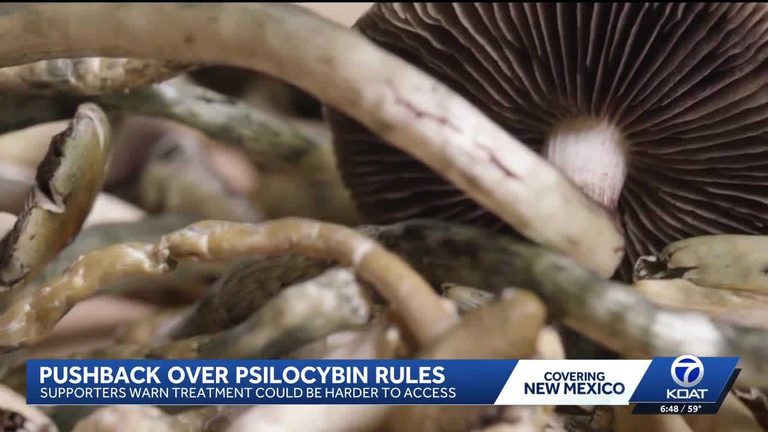
The New Mexico Department of Health (DOH) is under fire from advocates who say its draft rules for a medical psilocybin program could keep the therapy out of reach for many who need it most. The concerns focus on veterans, first‑responders, people living in remote areas and patients seeking end‑of‑life relief.
Proposed rules under scrutiny
The DOH’s proposal outlines a framework that includes patient registration, provider certification, mandatory training and a list of approved treatment locations. While the department says the measures are intended to ensure safety and consistency, critics argue that the requirements create unnecessary barriers.
“If we build the safest program in the country, but we make it inaccessible to veterans like myself, first responders, survivors, and people without significant financial resources, then we truly haven’t created access,” said one veteran advocate during a public hearing.
Potential impact on vulnerable groups
Medical psilocybin is being prescribed for conditions such as post‑traumatic stress disorder, anxiety, depression and other serious mental‑health challenges. Advocates fear that strict location‑based requirements could force patients to travel long distances, a burden that is especially heavy for those in rural parts of New Mexico where specialist clinics are scarce.
Veterans, who often rely on the Department of Veterans Affairs for care, may find it difficult to coordinate treatment under the new rules. Similarly, patients in hospice or end‑of‑life care may be unable to access timely therapy if only a handful of approved sites are designated.
Calls for alternative safety standards
Rather than limiting the number of treatment sites, some stakeholders are urging the DOH to adopt location‑based safety standards that allow more providers to participate while still protecting patients. They suggest that rigorous training and oversight can be achieved without restricting geographic access.
“We need a program that balances safety with accessibility,” said a representative from a statewide patient‑advocacy group. “Our veterans and rural families deserve the same opportunity for healing as those in urban centers.”
Department response and next steps
The DOH has received roughly 80 written comments and will consider public testimony before finalizing the regulations. Officials emphasize that the draft is a starting point and that they are open to revisions that address legitimate concerns.
“Our goal is to create a responsible, evidence‑based framework for medical psilocybin that protects public health while expanding treatment options,” a spokesperson for the department said. “We will carefully review all feedback and work with stakeholders to refine the rules.”
Context of the program
New Mexico became the third state to approve a medical psilocybin program last year, following Oregon and Colorado. The legislation reflects a growing national conversation about the therapeutic potential of psychedelic substances, but also highlights the challenges of translating policy into practical, equitable access.
As the state moves toward finalizing its rules, the debate underscores a broader tension between ensuring safety and avoiding unintended restrictions that could leave the most vulnerable patients without care.
Original reporting: KOAT Albuquerque — read the source article.