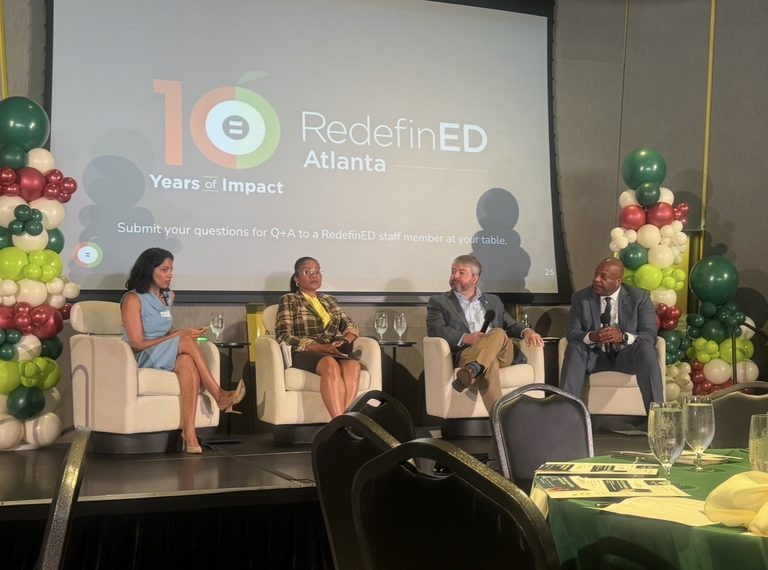
Georgia’s public schools are still funded largely through the Quality Basic Education (QBE) formula created in 1985, a fact that education leaders emphasized at a RedefinED Atlanta luncheon held at the National Center for Civil and Human Rights on September 12. The event, marking RedefinED’s 10‑year anniversary, brought together policymakers, administrators and advocates to examine whether the decades‑old funding model can keep pace with today’s student needs.
Outdated formula under scrutiny
Dana Rickman, president and CEO of the Georgia Partnership for Excellence in Education, explained that the QBE formula calculates state aid based on enrollment numbers and a set of weightings for teachers, administrators and support staff. While the system worked for a different era, Rickman said it “has not kept pace with changes in education or the needs that students bring into classrooms today.”
Key gaps identified include the rising costs of technology, school safety, mental‑health services and overall student well‑being. “In the 1980s, technology in school was an overhead projector, maybe a mainframe computer in the media center,” Rickman noted. “Today, technology in school is absolutely necessary – high‑speed internet, Chromebooks, cybersecurity – none of which are properly accounted for in our current QBE model.”
Local districts feel the strain
Clayton County Public Schools senior chief of staff for Academics and District Operations, Dr. Keith Colbert, described how the district’s demographics have shifted dramatically since the formula’s inception. Concentrated poverty has increased demand for intensive academic support, yet staffing has not kept up. He estimated that roughly 700 students qualify for early‑intervention services, but only about 20 teachers are available to deliver those services, leaving many children without needed help.
Dr. Cayanna Good, deputy commissioner of Innovation and Impact for the Technical College System of Georgia and chair of the State Charter Schools Commission, shared a vivid example from a rural school where children wore nightgowns to class because they provided the long sleeves needed for cold weather. “There wasn’t a nearby retail store where families could easily buy coats,” Good said, underscoring the depth of poverty in some communities.
Looking to neighboring states for models
Panelist Mark Dixon, president and CEO of A+ Education Partnership in Alabama, highlighted his state’s recent shift to a hybrid funding model. Alabama retains its foundational formula but adds supplemental allocations based on specific student needs, such as poverty, special education, English‑language learners and gifted programs. The approach, he argued, allows policymakers to address “the whole system” rather than trying to balance resources across the board.
Alabama also adopted the Alabama Literacy Act in 2019, a statewide strategy aimed at ensuring all students read at grade level by the end of third grade. Dixon said the act provides a clear, unified vision for literacy, avoiding a patchwork of disconnected initiatives.
Calls for legislative action
While the Georgia legislature has offered one‑time grants to address emerging needs, Rickman warned that such short‑term fixes do not solve the structural funding shortfall. He urged lawmakers to consider a comprehensive overhaul of the QBE formula that incorporates modern cost drivers and provides predictable, ongoing support for schools facing heightened challenges.
“Children eat first,” Colbert reminded the audience, emphasizing that any funding reform must prioritize the basic needs of students before political considerations. He called for continued dialogue among educators, policymakers and community members to keep the focus on student impact.
Next steps
The discussion at the RedefinED luncheon signals growing momentum among Georgia’s education community to modernize school financing. Stakeholders hope that upcoming legislative sessions will include serious consideration of a revised formula that reflects today’s technological, safety and mental‑health realities, ensuring that every child in Georgia receives a quality education regardless of zip code.
Original reporting: SaportaReport — read the source article.