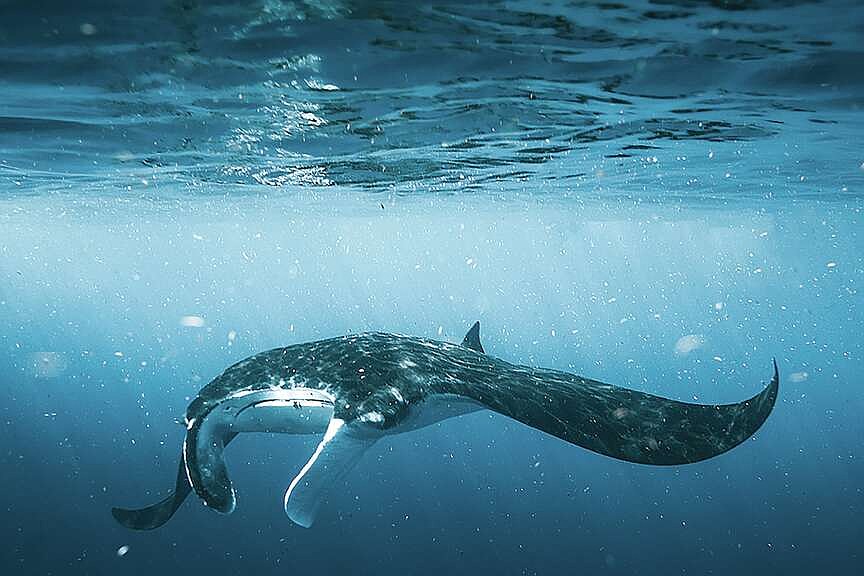
In a recent study published in the journal Ecology and Evolution, researchers have documented a unique behavior in remoras, also known as suckerfish. These fish have been observed engaging in ‘cloacal diving,’ where they hide inside the cloaca of manta rays for protection. This behavior, previously seen in whale sharks, was recorded in manta rays for the first time. The observations, conducted by the Marine Megafauna Foundation, suggest this could be a common behavior among remoras and rays across various ocean basins.
Singing Mice and Human Speech
Meanwhile, in the cloud forests of Central America, Alston’s singing mice have been the subject of another intriguing study. These mice, known for their complex vocalizations, have been found to possess neural pathways that allow them to sing in a manner similar to human speech patterns. Researchers at Cold Spring Harbor Laboratory discovered that these mice have a higher number of neurons connecting the motor cortex to specific brain regions, enabling their unique vocal abilities. This discovery not only enhances our understanding of animal communication but also offers insights into the evolution of human language.
Facial Recognition and Historical Art
In another scientific endeavor, researchers have utilized computational facial recognition to analyze a 16th-century sketch by Hans Holbein the Younger. Initially thought to depict Anne Boleyn, the analysis suggests that the sketch more likely portrays her mother, based on facial similarities with known portraits of Elizabeth I, Anne Boleyn’s daughter. This study highlights the potential of modern technology in unraveling historical mysteries.
Original reporting: Texarkana Gazette — read the source article.