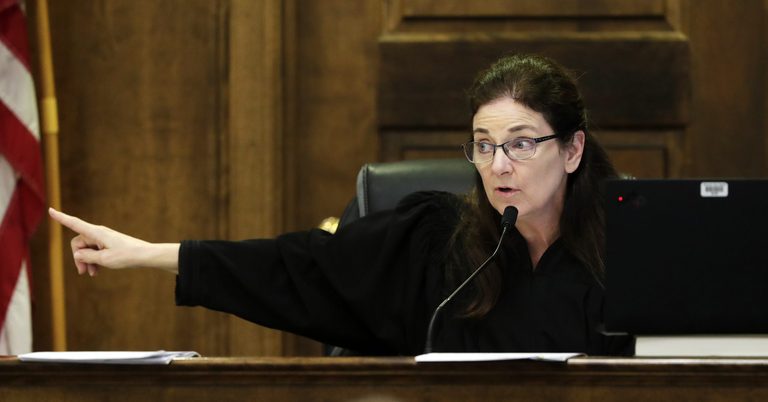
Brown County Circuit Judge Tammy Jo Hock told the county’s Public Safety Committee on Sept. 9 that her courtroom staff are working through lunch and staying late simply to keep cases moving. She described the practice as “unreasonable” for her employees, but said it is the only way to prevent further delays.
State budget leaves courts severely under‑resourced
Judge Hock pointed to the Wisconsin state budget for 2025‑27, which earmarks less than 2% for the entire judicial system. “When you limit your resources like that, you’re not providing what the state needs,” she said, adding that she hopes the Legislature will soon address the shortfall.
The warning comes as Wisconsin voters prepare for the Nov. 3 elections that will decide the composition of the state Legislature, the body with authority over the budget, and the governor’s office.
Shortages affect judges, prosecutors and public defenders
The Wisconsin Judicial Needs Assessment Survey released in April shows Brown County has the largest deficit of judges and court commissioners in the state, lacking nearly six officials. Similar staffing gaps exist in district attorney offices, public defense agencies and law‑firm recruitment, creating a ripple effect throughout the criminal‑justice system.
Prosecutors are confronting backlogs that run into the thousands, slowing convictions. In 2025, about half of all criminal cases required more than six months to resolve, and some defendants spent months without an attorney, putting pressure on jails.
Technology and self‑representation add to the burden
The 2025 Judicial Needs Assessment also noted that digital evidence—body‑camera footage, text messages and other electronic records—has become routine and demands extensive review time. Additionally, an increase in self‑represented litigants using artificial‑intelligence tools to draft filings has forced judges to spend more time interpreting lengthy, unclear or legally inconsistent documents.
Outagamie County District Attorney Mindy Tempelis testified before the state’s study committee that the formula used to calculate prosecutor staffing is outdated, still assuming paper‑based work. She highlighted the need for real‑time data to reflect modern workloads.
Local officials seek concrete solutions
Judge Hock pressed the Public Safety Committee to endorse a resolution urging the Brown County Board to request two additional circuit judges from the state. The resolution notes that 3,755 criminal cases were pending in the county in 2025.
To accommodate two new judges, the county would need roughly $222,814 for support personnel, including two sheriff’s deputies, judicial assistants and court coordinators, plus a one‑time staff‑setup charge. County Board Chairman Patrick Buckley expressed concern about who should bear these costs, asking whether cuts would fall on the sheriff’s office, 911 services or other essential functions.
While the state director of courts believes the Legislature may only fund two judges, Judge Hock emphasized that without adequate support staff, additional judges cannot function effectively.
Calls for data‑driven funding
Both Judge Hock and District Attorney Tempelis argued that a sustainable judicial system requires accurate workload data and fully funded pay progression for prosecutors. They warned that without such reforms, political considerations could continue to dictate funding decisions, leaving the courts and the communities they serve vulnerable.
The upcoming November elections will determine whether Wisconsin’s lawmakers prioritize these judicial funding needs amid broader budget debates.
Original reporting: Wisconsin Watch — read the source article.