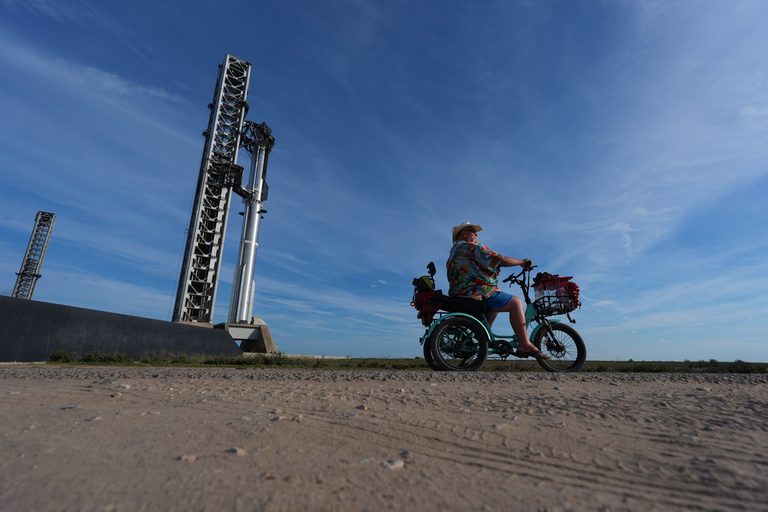
SpaceX’s Starship took off from the Starbase launch site on the southern tip of Texas on Monday, marking the company’s first attempt to place the massive vehicle into a sustained orbit. The test flight is intended to demonstrate the rocket’s ability to complete six full laps around Earth – a key milestone before NASA can certify the vehicle for the Artemis moon‑landing program.
Local significance
The launch underscores the growing importance of the Brownsville area as a hub for advanced aerospace activity. The Starbase complex, operated by SpaceX, has become a major employer in the region, providing high‑skill jobs and drawing related suppliers to South Texas. Local officials have repeatedly highlighted the economic boost that the facility brings, from construction contracts to long‑term aerospace research partnerships.
Mission profile
Starship, the largest and most powerful rocket ever built, carried 26 new Starlink satellites alongside the fleet of roughly 11,000 older models already delivering broadband service. The vehicle was slated to reach an altitude of about 170 miles (275 kilometers) and then circle the globe six times over a period of nearly ten hours. After completing its orbital passes, the spacecraft was expected to splash down in the Pacific Ocean near Chile, while the first‑stage booster would descend into the Gulf of Mexico within minutes of liftoff.
Safety precautions
Elon Musk emphasized the company’s caution, noting that a failure over land could endanger the public and quickly erode the company’s reputation. “If the spacecraft breaks apart over land and rains debris onto people, our popularity would diminish very rapidly,” Musk said at a recent business summit. The decision to keep the booster away from the launch site and to target ocean splashdowns reflects that concern.
Future plans
If the orbital test succeeds, SpaceX plans to attempt a return‑to‑launch‑pad landing using massive mechanical arms that will capture the hovering vehicle. Musk has indicated that a successful catch could allow a second flight of the same Starship by the end of the year or early next year.
The reusable design of Starship is central to SpaceX’s strategy of lowering launch costs. The company recently salvaged a previous Starship that splashed down in the Indian Ocean in July, using the recovered hardware to improve the heat shield on the current vehicle.
Artemis connection
NASA’s Artemis III mission, slated for as early as next summer, will involve a triple‑launch docking exercise in Earth orbit that includes an Orion crew capsule, Jeff Bezos’s Blue Moon lander, and Musk’s Starship. The subsequent Artemis IV mission, expected no sooner than 2028, could see astronauts land on the moon using either Blue Moon or Starship, depending on which system is ready first. The success of this orbital test is therefore a critical step toward those lunar objectives.
Broader impact
Beyond the moon program, SpaceX intends to use Starship to launch large batches of satellites, eventually phasing out its older Falcon 9 rockets. The company is also developing a second launch site at Kennedy Space Center in Florida and a third in Louisiana, expanding its national footprint.
While the test represents a significant technical achievement, it also highlights the partnership between private industry and the federal government in advancing America’s space ambitions. Successful certification of Starship could accelerate both lunar exploration and the commercialization of low‑cost, high‑capacity satellite launches.
Original reporting: Alexandria, VA News – WTOP News — read the source article.