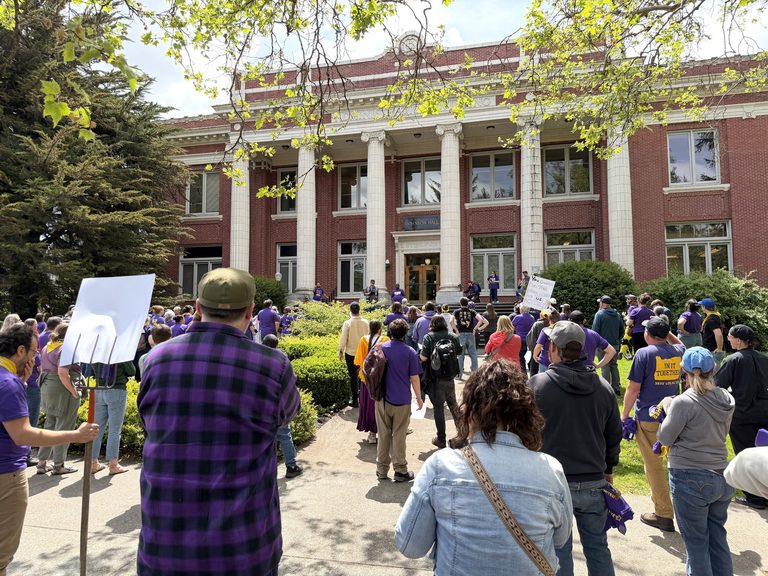
Classified employees at the University of Oregon are poised to begin a strike at 6 a.m. on Monday, Sept. 28, after the university’s bargaining team did not present an offer the union deems acceptable. The Service Employees International Union Local 503, which represents roughly 1,800 staff across Oregon’s public universities, announced the action on its Facebook page, warning that workers will walk off the job if a new contract is not reached before the deadline.
Union says the offer falls short of cost‑of‑living needs
“The economic offer from university management leaves us with no other choice,” the SEIU post read. The union’s members have voted overwhelmingly in favor of striking if a deal with suitable terms is not reached, according to a statement released on Sept. 17. Workers are demanding higher wage increases that keep pace with the rising cost of living and are pushing back against proposed changes to step‑increase provisions and other worker protections.
Leadership cites failed negotiations
“Negotiations went into the evening and management ultimately did not come to the table with an acceptable offer,” said Jennifer Smith, president of the SEIU’s University of Oregon chapter, in a comment posted late Sunday. Smith added that the union remains ready to strike but hopes the university will return to the table before the 6 a.m. deadline.
Potential impact across the state
The strike would not be limited to Eugene; it could spread to other public universities from eastern Oregon to Portland. The union has already sent messages to workers at these campuses, urging them to prepare for picket lines in the morning.
Room for a last‑minute agreement
Despite the looming walkout, the university’s bargaining team still has a narrow window to present a revised offer before the deadline. If an acceptable proposal is delivered before 6 a.m. Monday, the strike could be averted.
What’s at stake for families
Many of the classified workers are primary breadwinners for traditional families in the Eugene area. Their request for wages that “they can afford to live on” reflects broader concerns about the cost of housing, childcare, and everyday expenses that affect families across Oregon.
The situation underscores a growing tension between state universities and labor groups as institutions grapple with budget constraints while trying to retain essential staff. As the deadline approaches, both sides face pressure: workers to secure a livable wage, and university officials to maintain operations without disruption to students’ education.
For now, the eyes of the university community are on the 6 a.m. deadline, waiting to see whether a last‑minute agreement can be reached or whether the strike will begin as scheduled.
Original reporting: Homepage – Lookout Eugene-Springfield — read the source article.