The bar at Bratenahl Brewing Company pours exactly twelve taps on any given night, a number that shifts week to week without announcement. Regulars have learned not to expect their usual — and that uncertainty, oddly, is what keeps them coming back.
Bratenahl sits at the eastern edge of Cleveland’s lakefront, in the tiny village of Bratenahl itself, a municipality so small it is easy to miss entirely while driving along Lake Shore Boulevard. The brewery occupies a converted industrial space with exposed brick on three sides and a bank of windows that looks out over nothing particularly scenic — a parking lot, a scrub of trees — yet the room feels settled and unhurried in a way that newer, flashier taprooms rarely manage.
The beer program leans hard into lagers and session ales. Head brewer Marcus Pell spent several years at a German brewery before returning to Northeast Ohio, and that influence shows: the pilsners are dry and clean, the helles is soft-malt without being cloying, and the kellerbier — when it appears — sells out in two days. The IPAs exist mostly as a concession to market pressure, Pell has been known to say, though the hazy he puts out each spring is genuinely good. Food is minimal, in the European sense: charcuterie, sharp cheeses, a rotating selection of pickled things in small jars. A few evenings a week a local vendor brings in wood-fired flatbreads from a cart near the entrance.
First-time visitors often arrive expecting a crowded, loud scene — the kind of place where you have to shout your order. Bratenahl delivers none of that. On a Tuesday the room might hold twenty people, mostly in pairs, talking at a volume appropriate to conversation. Weekends are busier but not chaotic. There is no trivia night, no cornhole, no DJ. The background music tends toward jazz at low volume, sometimes vinyl, sometimes not.
Pricing sits right at the Cleveland norm: most pints run between six and eight dollars, the charcuterie board is around fourteen. Pell’s seasonal releases occasionally command a dollar or two more, and those sell out at the bar rather than through any pre-sale hype machine.
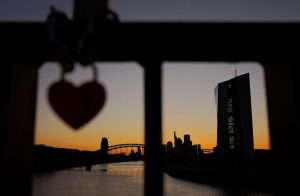
The outdoor patio, open from late April through October, is where the place comes closest to living up to its address. It does not face the lake, but on clear evenings the light over the tree line goes a particular shade of amber that people photograph constantly. The patio furniture is mismatched — some wrought iron, some plastic, some wooden pallets converted to low tables — and somehow none of it looks accidental.
Bratenahl Village itself rarely appears on any Cleveland itinerary. It has no commercial strip, no coffeeshop, no museum. The brewery is essentially the only reason most Clevelanders have to pull off Lake Shore in that stretch. That insularity gives the place a neighborhood-bar quality despite drawing from across the east side and beyond. Regulars come from Euclid, from University Circle, from Shaker Heights, and they all seem slightly surprised to find one another there, as if each discovered it independently and has been keeping it quiet.
Worth the drive east. Order the kellerbier if it is on. If it is not, try whatever Pell says he is most proud of that week. He will tell you honestly.