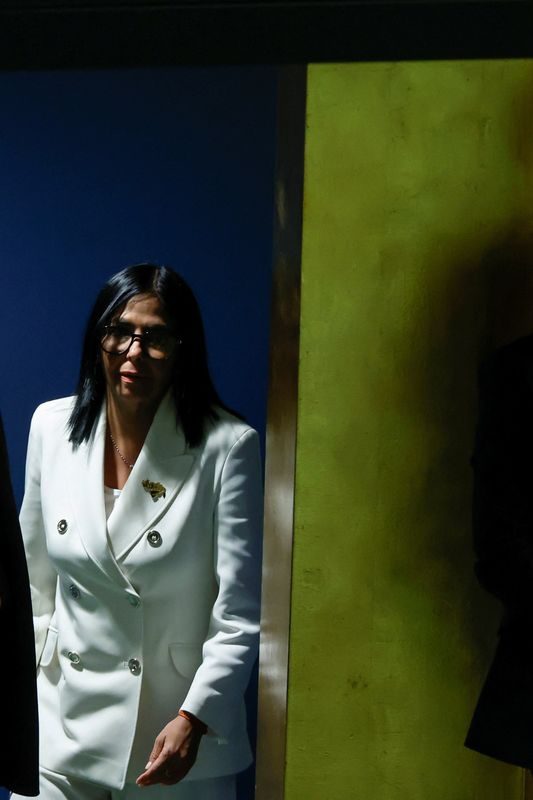
NEW YORK — Interim President Delcy Rodríguez of Venezuela concluded a week‑long UN General Assembly visit that showcased Washington’s influence over the country’s political direction. While no signed agreements on debt relief, energy or mining materialized, the trip underscored President Trump’s firm stance that the United States stands ready to support a free and fair election in Venezuela.
Trump’s message to the UN
Addressing the assembly, President Trump said, “To the victor belong the spoils,” reminding Rodríguez that the United States is prepared to use its “unmatched military might” to ensure stability and democratic progress in the region. Although he did not name Rodríguez directly, his remarks were clearly aimed at encouraging a transparent electoral process.
U.S. diplomatic engagement
Following the speech, U.S. Secretary of State Marco Rubio met with Rodríguez and discussed restructuring Venezuela’s sovereign debt. Rubio emphasized that any successful economic plan must culminate in a free and fair election, reinforcing the administration’s policy of linking financial assistance to democratic reforms.
International reactions
Other delegations observed the dynamics at the UN. The Cuban mission, once a close ally of Caracas, walked out when Trump referenced Cuba, while Spain’s Prime Minister Pedro Sánchez offered a brief, courteous greeting to Rodríguez. Russia’s delegation sought a meeting with Venezuelan Foreign Minister Félix Plasencia to discuss oil projects, and the Inter‑American Development Bank signaled interest in a $2.5 billion bridge loan, though some board members expressed reservations.
Domestic response and protests
Outside the UN, more than 50 demonstrators carried signs reading “New Face, Same Regime,” urging Rodríguez to join former President Nicolás Maduro, who remains detained in Brooklyn. The protest reflected lingering skepticism among Venezuelan expatriates, yet the Trump administration’s clear message was that U.S. support hinges on a credible electoral timetable.
Election timeline and expectations
Rodríguez has avoided setting a specific election date for nine months. Analysts now estimate that at least twelve months will be needed to appoint reliable authorities and organize voting. The White House and Venezuelan ministries declined to comment on a precise schedule, but the administration’s consistent messaging suggests that the United States will continue to press for a timely transition.
What’s next?
U.S. officials are expected to maintain diplomatic pressure while exploring avenues for economic assistance, contingent on democratic milestones. The Trump administration’s approach combines firm rhetoric with strategic incentives, aiming to steer Venezuela toward a stable, market‑friendly future that aligns with American interests and the broader goal of regional liberty.
Original reporting: Appleton, WI News Feed (HLL/CB) — read the source article.