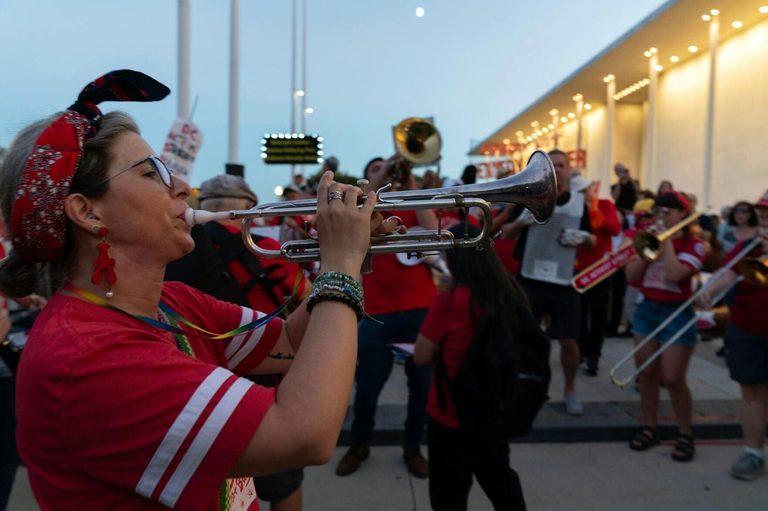
Washington, D.C. – The Kennedy Center, a national cultural treasure, is at the center of a heated dispute after President Trump reshaped its board of trustees in February 2025 and assumed the chairmanship. The move has prompted two federal lawsuits: one filed by Rep. Joyce Beatty, an Ohio Democrat, and another by a coalition of architects and preservationists. Both cases are being heard by U.S. District Judge Christopher R. Cooper.
Board restructuring and presidential control
Congress created the Kennedy Center and retains authority over its funding and governance. Traditionally, the board of trustees operated as a bipartisan body, overseeing the Center’s earned revenue, donor contributions, and programmatic mission. In early 2025, President Trump directed a sweeping reorganization that replaced many longstanding members with appointees loyal to his administration. He subsequently took the role of board chair, a position historically held by a nonpartisan figure.
President Trump and his administration contend that the restructuring was necessary to eliminate bureaucratic inertia and accelerate needed capital repairs. In 2025, a Republican‑controlled Congress approved $257 million for essential repairs, restoration, and security upgrades. The administration argues that a unified board under presidential leadership can more efficiently allocate those funds and protect the Center’s historic assets.
Legal challenges and oversight concerns
Critics argue that the changes undermine the system of checks and balances designed to keep the Center accountable. Rep. Beatty’s lawsuit alleges that the board’s actions violate the Kennedy Center’s founding charter and that the President’s direct involvement erodes congressional oversight. The preservation‑group suit seeks the removal of the current trustees and the appointment of a court‑appointed receiver, claiming the board has failed its fiduciary duties.Judge Cooper, who presided over a May 2026 ruling finding the board “derelict in discharging the full range of its responsibilities,” has emphasized that any alteration to the Center’s governance must receive congressional approval. Nonetheless, the Trump administration maintains that the board’s current composition is within legal bounds, citing the President’s constitutional authority to appoint trustees to federal entities.
Impact on the Center’s programs and finances
Since the board’s overhaul, the Center has reported a noticeable decline in ticket revenue and a rise in artist cancellations. The administration attributes the dip to broader market trends and the lingering effects of the COVID‑19 pandemic, noting that the Center’s finances were strong prior to the February 2025 changes, according to a Washington Post analysis.
President Trump’s broader record on federal landmarks includes the demolition of the White House East Wing in October 2025 and the construction of a new helipad on the White House grounds. Supreme Court Chief Justice John Roberts described the President’s plan to build a ballroom on the former East Wing site as “likely unlawful” because it lacked congressional authorization, yet construction continued.
What’s at stake for Washington’s cultural heritage?
The Kennedy Center was established as a “living memorial” to President John F. Kennedy, honoring his legacy through performances, education programs, and public art. Supporters of the President’s board changes argue that a streamlined governance structure will better preserve the Center’s mission and ensure timely maintenance of its historic facilities.
Opponents warn that without robust oversight, the Center could face further financial strain and potential alterations to its historic character. They call for continued independent journalism and citizen activism to keep the administration’s actions transparent.
Next steps
The lawsuits remain pending, and Judge Cooper’s future rulings will determine whether the board must be reconstituted or if the President’s appointment authority stands. In the meantime, the Kennedy Center continues to host performances and educational events, albeit under heightened scrutiny.
Original reporting: KTBS 3 (Shreveport) — read the source article.