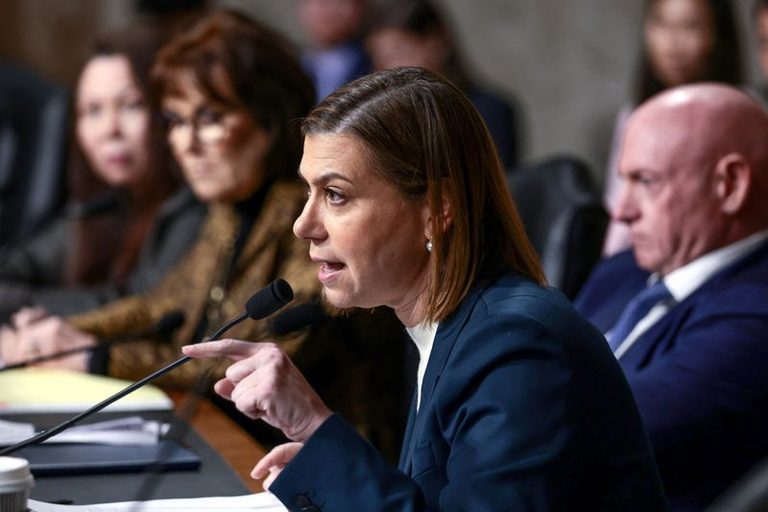
Washington — On Thursday, Democratic Senator Elissa Slotling of Michigan and Republican Senator Bernie Moreno will seek unanimous consent on the Senate floor to make permanent a ban on Chinese‑manufactured automobiles. The move comes as President Donald Trump meets with Chinese President Xi Jinping to discuss broader trade issues.
Legislative push gains bipartisan support
Slotling told Reuters that the bill enjoys overwhelming backing in the Senate, with a reported vote expectation of 99‑1. Only one Republican is expected to oppose the measure, and under the fast‑track procedure a single dissenting vote could block approval.
The legislation, already backed by more than 100 co‑sponsors in the House, would codify a ban that began under the previous administration in early 2025. That regulation barred Chinese automakers from selling or building passenger vehicles in the United States over concerns that sensitive driver data could be transmitted to China. In addition, the United States maintains tariffs exceeding 100 % on Chinese electric vehicles.
Trump’s stance aligns with industry concerns
During the same week, President Trump reiterated his willingness to allow Chinese companies to build cars on U.S. soil, a comment that alarmed domestic automakers. Industry groups, suppliers, and dealers have urged the President to keep the “door firmly shut” to Chinese manufacturers seeking to import, sell, or produce vehicles in the United States.
Slotling warned, “If President Trump allows these Chinese companies in, it is the beginning of the end of the auto industry in the United States.” Her remarks reflect a broader bipartisan consensus that protecting American jobs and data security outweighs any potential benefits of Chinese investment in auto production.
Potential impact on foreign‑owned brands
Senator Ted Cruz has noted that the bill could affect companies with more than 15 % ownership by Chinese entities, potentially including Mercedes‑Benz, which has nearly a 20 % stake held by Chinese investors. Moreno indicated that Mercedes‑Benz would have until 2030 to comply, with the possibility of waivers if necessary. Ongoing discussions are reportedly underway to determine how the German automaker could meet the new requirements.
The proposed law would also prevent the White House from issuing waivers that allow Chinese manufacturers to sell vehicles in the United States, solidifying the ban into statutory law.
Why the ban matters for American families
Supporters argue that a permanent ban safeguards American families by ensuring that vehicles on U.S. roads are not vulnerable to foreign data collection. The measure also aims to preserve domestic manufacturing jobs, a cornerstone of traditional family stability and economic security.
Critics, primarily from free‑trade advocacy groups, contend that the ban could raise vehicle prices and limit consumer choice. However, the bipartisan coalition in Congress emphasizes national security and the protection of American industry as paramount.
Next steps
If the Senate grants unanimous consent, the bill will move swiftly toward final passage, likely reaching President Trump’s desk before the end of the year. The administration has already signaled strong support for the measure, aligning with the broader trade agenda being discussed in the President’s meeting with President Xi.
Stakeholders across the automotive sector are watching closely, as the outcome will shape the future of vehicle manufacturing, importation, and data security in the United States.
Original reporting: Appleton, WI News Feed (HLL/CB) — read the source article.