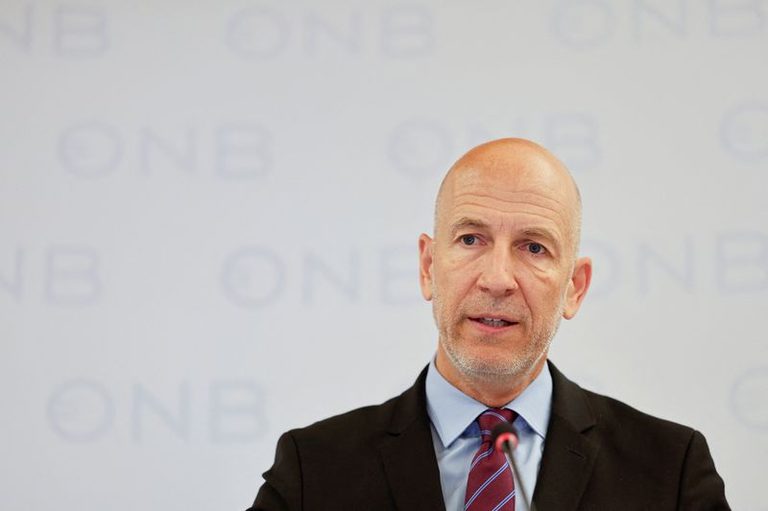
In an interview with the Austrian daily Kurier, European Central Bank (ECB) governing council member Martin Kocher emphasized that the bank will evaluate the economic outlook at each policy meeting before deciding whether to raise interest rates. Kocher said the approach reflects the “high level of uncertainty” and the “price shock” caused by the ongoing situation in the Middle East.
Meeting‑by‑meeting assessment
Kocher reiterated a stance the ECB has been signaling for months: rather than committing to a preset path for monetary tightening, the bank will take a cautious, data‑driven route. “We have said clearly — and I believe it is the right approach — that, given the high level of uncertainty and the price shock due to the situation in the Middle East, we will assess the situation anew at every meeting,” he said.
Why the caution matters
The ECB faces a delicate balancing act. Inflation across the eurozone remains above the bank’s 2 % target, driven in part by higher energy prices linked to geopolitical tensions. At the same time, growth in many member states shows signs of slowing, and unemployment, while still below pre‑pandemic levels, has not returned to its historic lows.
By reviewing conditions at each meeting, the ECB hopes to avoid over‑tightening that could stifle recovery, while still signaling readiness to act if inflation proves too persistent. This flexible stance aligns with the central bank’s mandate to maintain price stability without jeopardizing economic growth.
Implications for markets and households
Financial markets have been closely watching ECB signals, as interest‑rate decisions affect borrowing costs for households and businesses throughout Europe. A decision to raise rates could increase mortgage payments and corporate financing costs, while a pause or cut would provide relief but risk reigniting inflation.
Kocher’s comments suggest that investors should expect a measured, case‑by‑case approach rather than a rapid series of hikes. This measured tone may help temper market volatility, offering a clearer view of the policy path ahead.
Comparisons with other central banks
The Federal Reserve in the United States has also adopted a data‑dependent strategy, adjusting its policy rate as new information emerges. Kocher’s remarks underscore a broader trend among major central banks to prioritize flexibility over rigid forward guidance, especially in an environment marked by geopolitical uncertainty.
Looking ahead
The ECB’s next policy meeting is scheduled for early October. Analysts will be looking for any hints in the minutes or statements that could signal a shift toward tighter or more accommodative policy. Kocher’s interview makes clear that the bank’s primary concern remains navigating uncertainty while keeping inflation in check.
For European citizens, the takeaway is that the ECB is committed to protecting purchasing power without imposing unnecessary burdens on borrowers. By assessing the economy at each meeting, the bank aims to strike a balance that supports both price stability and sustainable growth.
Original reporting: Appleton, WI News Feed (HLL/CB) — read the source article.