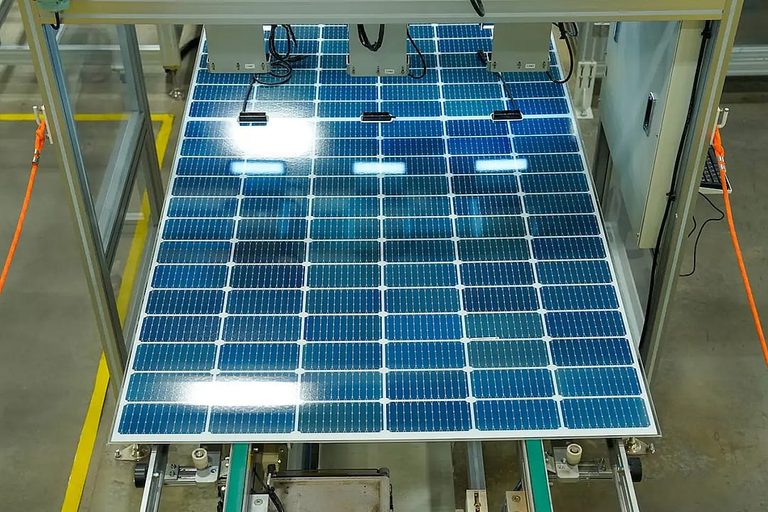
Inside Qcells’ sprawling factory just north of Atlanta, workers and robots handle ultra‑thin slices of polysilicon to create the blue cells that become solar panels. The plant, which cost $2.5 billion and consumes 90 megawatts of power, recently began expanding to bring the entire panel‑making process under one roof.
Trump administration’s new trade measures
Effective December, the administration will impose tariffs and set minimum import prices on polysilicon, the key ingredient for solar cells. The move is designed to make foreign‑made polysilicon, especially from China, more expensive and give U.S. manufacturers like Qcells a competitive edge.
“Having the full supply chain is critical,” said Ben Damiani, chief technology officer at Atlanta‑based Cherry Street Energy. He added that the constantly shifting policy landscape has been the biggest obstacle for domestic solar production.
From carrot to stick
Under the previous administration, the 2022 Inflation Reduction Act offered tax‑credit bonuses for projects that used U.S.–made panels, a factor Qcells cited when deciding to build the Cartersville plant. By contrast, the Trump administration’s recent “One Big Beautiful Bill Act” eliminated most of those credits and barred solar equipment from certain countries, including China, from the remaining incentives.
Researcher Coco Zhang of ING noted that while both policy approaches share the goal of reviving American solar manufacturing, the back‑and‑forth has created uncertainty for companies. Qcells has already invested billions in its new facility, but smaller firms with less capital may find the shifting incentives insufficient.
Impact on developers and consumers
The phase‑out of federal clean‑energy tax credits and new hurdles for solar and wind projects on federal land have added costs and delays, even as courts have blocked some of the administration’s actions. In the first quarter of this year, clean‑energy advocacy group E2 reported nearly $13 billion in abandoned solar, wind, and battery projects, while $18 billion in new projects were announced as developers raced to meet expiring credit deadlines.
According to Zhang, the new polysilicon tariffs could help U.S. manufacturers supply the remaining solar developments, but they may also raise prices for developers who will still rely on limited imports.
Solar’s continued relevance
Despite policy turbulence, experts agree solar power remains a cornerstone of the nation’s energy mix. The Solar Energy Industries Association reports that solar and storage accounted for 90 percent of new power added to the grid in the first quarter. “Solar is the fastest‑deployed, lowest‑cost source of electricity,” said Damiani, adding that it will play a vital role for decades to come.
For Georgia, the Qcells expansion represents a significant job‑creation opportunity and a step toward reducing reliance on foreign solar components, aligning with the administration’s goal of strengthening national security and domestic industry.
Original reporting: El Paso News (HLL/CB) — read the source article.