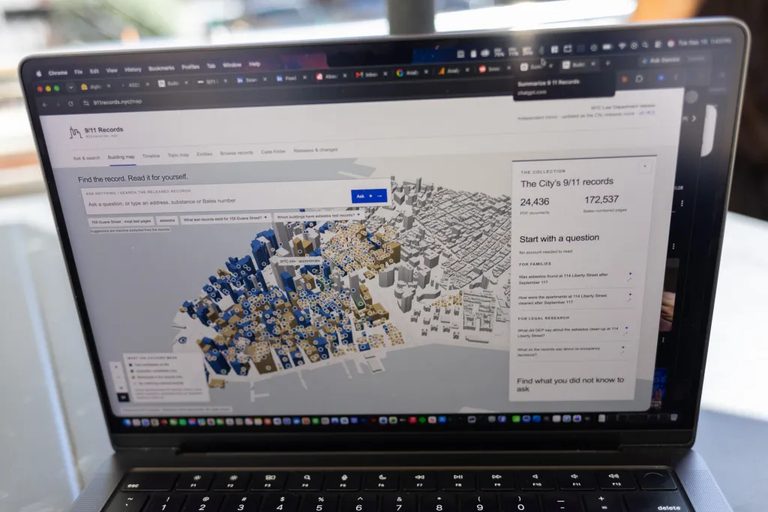
When Henry Williams, a project manager and longtime data‑junkie, tried to access the newly released 9/11 city documents, he found a confusing portal with no guidance. Determined to make the information truly accessible, Williams downloaded the more than 170,000 pages and built his own site, 911records.nyc, from his Bensonhurst home.
From a tangled portal to a clear map
Williams says the official platform offers the data but not the tools to find it. “If you don’t know what you’re looking for, you’re never going to find it in this platform, because there’s nothing there,” he explained. His new site features a 3‑D map that shows how many individual addresses around Lower Manhattan are represented in the records. Each dot on the map can be clicked to pull up every available document linked to that location.
A personal motivation
The project is deeply personal. Williams’s father‑in‑law, Hughie Yee, was a Deutsche Bank database analyst who was working near the World Trade Center when the towers fell. He survived the initial collapse but suffered severe respiratory injuries from the toxic dust. After being denied assistance from the victims’ compensation fund because of missing witnesses, Yee’s family appealed. By the time the appeal was heard, Yee had undergone a tracheotomy and could not speak. He was approved for compensation only a week before his death.
“It was a really frustrating process to find any proof or any paperwork and that’s kind of what motivated me here,” Williams said. He hopes the new portal will help other families locate the documentation they need to secure health care and compensation.
Mayor’s office backs the release
Mayor Zohran Mamdani’s administration released the records after years of lawsuits by advocates and survivors. The city settled two lawsuits and allocated $34 million to facilitate the release. At a recent press conference, the mayor said the documents “will help New Yorkers access the health care they need.” He added that the files reveal what the city knew about the toxic air around Ground Zero, when it learned of the hazards, and how it acted to limit liability.
Sam Raskin, a spokesperson for the mayor, praised Williams’s effort, stating, “Making these records accessible and encouraging the public to engage with them is exactly why the Mamdani administration dedicated the resources necessary to bring them to light.”
Community impact
Williams and his wife, Jennifer, see the project as a tribute to Yee’s memory and a service to the broader community. “If we can see it helping other people, it would be a good way to honor her father’s memory,” he said.
The site is free, open‑source, and designed for anyone without technical expertise. By turning a massive, unwieldy archive into an intuitive visual tool, Williams hopes to empower families, researchers, and journalists to better understand the long‑term health effects of the 9/11 attacks.
Looking ahead
While it remains to be seen how many families will benefit directly, the initiative demonstrates how local citizens can fill gaps left by government portals. As more data becomes available, Williams plans to add features such as searchable health‑outcome summaries and links to legal resources for victims seeking compensation.
Original reporting: The Connecticut Mirror — read the source article.