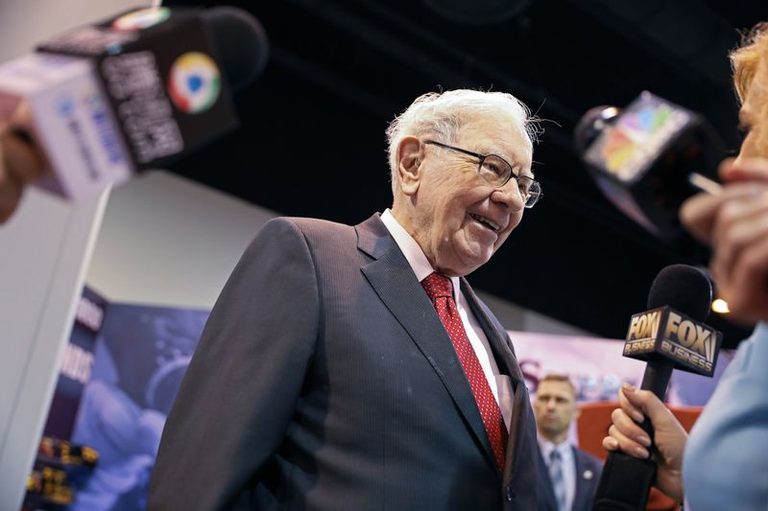
In a move that marks the end of an era for one of America’s most storied conglomerates, Warren Buffett announced he will step down as chairman of Berkshire Hathaway and assume the title of chairman emeritus. The change, effective immediately, means Buffett will no longer be involved in day‑to‑day decision making but will stay on the board to provide his judgment and perspective.
Key milestones under Buffett’s leadership
Buffett took control of Berkshire in 1965, transforming a struggling New England textile firm into a diversified holding company. The original textile operations were shuttered in 1985 after two decades of attempts to revive the business.
In 1967 Berkshire acquired National Indemnity, establishing the insurance platform that would become the financial engine of the company. Premiums from the insurance businesses supplied a steady flow of capital for future investments.
During the late 1980s, Berkshire began buying into Coca‑Cola and, by 1989, made a major investment in Gillette, reflecting Buffett’s preference for simple, understandable businesses.
When Salomon Brothers faced a trading scandal in 1991, Buffett stepped in as interim chairman, working for months with regulators to protect Berkshire’s $700 million stake and help keep the investment bank afloat.
From 1996 to 1998 Berkshire expanded aggressively into insurance, taking full ownership of GEICO and acquiring General Re. In 1999 the firm entered the utilities sector by acquiring MidAmerican Energy, later renamed Berkshire Hathaway Energy.
In 2006 Buffett pledged to give away nearly all of his Berkshire stock to philanthropic foundations. To date he has donated more than half of his shares, including over $47 billion to the Gates Foundation and more than $17 billion to four family charities.
During the financial crisis, Berkshire injected $5 billion into Goldman Sachs in September 2008 and another $5 billion into Bank of America in 2011. The Bank of America investment later generated an $11.5 billion profit in 2017, not counting dividend payouts. Berkshire also completed a $26.4 billion acquisition of railroad operator Burlington Northern Santa Fe in 2010.
In 2016 Berkshire began accumulating Apple stock, initially a roughly $1 billion stake that grew to become the company’s largest holding by the end of 2025.
More recently, in 2022 Berkshire deployed tens of billions of dollars into large purchases of Chevron, HP Inc., and Occidental Petroleum. By 2024 the company’s market value topped $1 trillion, making it the first non‑technology U.S. company to reach that milestone.
Transition to chairman emeritus
On January 1, 2026, Buffett formally handed the reins to Greg Abel, who succeeded him as CEO earlier in the year. The transition concludes a tenure that began in 1965 and saw Berkshire’s market value grow to over $1 trillion, delivering a cumulative return of more than 6,100,000 % for shareholders.
While Buffett will no longer be involved in day‑to‑day operations, his continued presence on the board ensures that his decades‑long investment philosophy will still influence Berkshire’s strategic direction. The company’s leadership emphasized that Buffett’s emeritus role is honorary and does not carry decision‑making authority.
Industry observers note that Buffett’s departure from active leadership is a significant moment for the investment community, but they also point out that Berkshire’s robust insurance and energy platforms, along with its diversified portfolio, position the firm for continued stability under Abel’s stewardship.
Buffett’s legacy extends beyond financial performance; his commitment to philanthropy, long‑term value investing, and a disciplined approach to capital allocation has become a benchmark for investors worldwide.
Original reporting: Appleton, WI News Feed (HLL/CB) — read the source article.