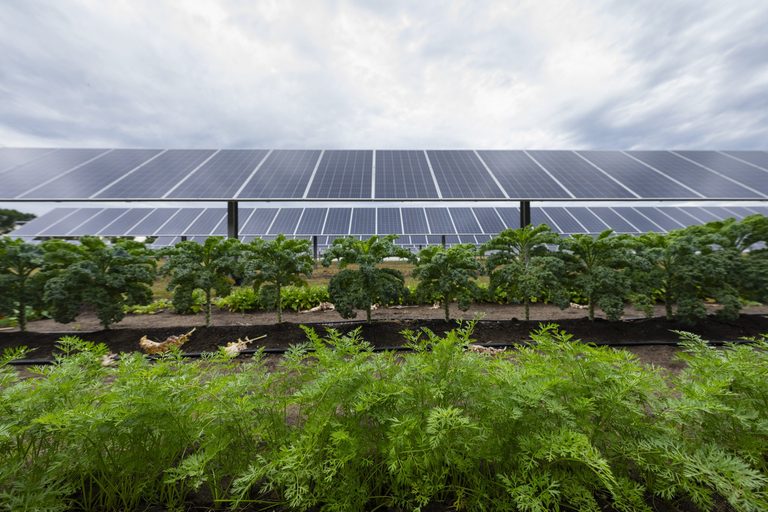
Winifred Sylvah harvested about 140 pounds of cucumbers on a rainy September morning, the rows of fresh produce stretching beneath the gleaming panels of a 1‑megawatt solar farm in Big Lake, Minnesota. Sylvah is one of three farmers who now work the land between and around the solar array, a pioneering agrivoltaics project that blends farming with clean‑energy generation.
Local partnership fuels the venture
The Big Lake Farm is a joint effort by The Food Group, a Minnesota nonprofit that supports emerging farmers and fights hunger, U.S. Solar and Conexus Energy. The partnership lets farmers lease land affordably while giving solar developers a productive use for land that would otherwise be fenced off. After a pilot year in 2023, the program was made permanent in 2024, and Sylvah and two other growers signed 10‑year leases this season.
Farmers gain stability and market access
Long‑term leases give emerging growers the certainty needed to plan for organic certification and to experiment with crops. “Having longer‑term leases is nice because it gives us a little more time to experiment,” said Food Group Executive Director Sophia Lenarz‑Coy. Sylvah, who arrived from Sierra Leone in the 1980s and spent three decades in banking, now tends an acre and a half of land—half inside the solar garden and half in an adjacent plot.
She grows shade‑loving vegetables such as onions, collard greens, green beans and scallions, as well as West African staples like okra, sweet‑potato greens and eggplant that are in high demand among Minnesota’s Liberian community. Sylvah sells her produce through a Community Supported Agriculture program and delivers directly to public schools in Albertville and Buffalo, reinforcing family‑centered nutrition for local children.
Research backs comparable yields
Iowa State University professor Ajay Nair, who leads agrivoltaics research, reports that yields in solar‑shaded plots match those of traditional fields. “Any grower can commercially grow their produce within an agrivoltaic system,” Nair told the Sahan Journal. He notes that underground wiring and ample irrigation make the land fully workable, and that the shade can even benefit certain crops.
Beyond crops, agrivoltaics offers co‑benefits for solar operators. Fences built around solar sites provide security for farmers, and growers can quickly alert companies to panel damage, fostering a cooperative relationship that eases rural land politics.
Federal policy shift underscores local resilience
In March, the U.S. Department of Agriculture announced a $300 million reduction in a grant program that previously helped new farmers, especially farmers of color, access land and markets. The cuts are part of the Trump administration’s effort to eliminate spending tied to diversity, equity and inclusion initiatives, redirecting federal resources toward core agricultural productivity and energy independence.
Lenarz‑Coy explained that because racial equity is a core value for The Food Group, the organization will not pursue federal grants for the next few years, focusing instead on private‑sector partnerships like the agrivoltaics project. This decision reflects a commitment to stewardship and self‑reliance, principles that align with traditional family values and faith‑based community service.
Looking ahead
Sylvah plans to add fabric mulch next season to reduce weed maintenance and to expand her West African eggplant production for the Liberian community. “I always will do my last harvest for Thanksgiving,” she said, underscoring the family‑oriented spirit that drives her work.
The Big Lake agrivoltaics farm demonstrates how renewable energy and agriculture can coexist, offering a template for other Minnesota communities seeking to support immigrant farmers, strengthen family food security, and promote responsible stewardship of the land.
Original reporting: Sahan Journal — read the source article.