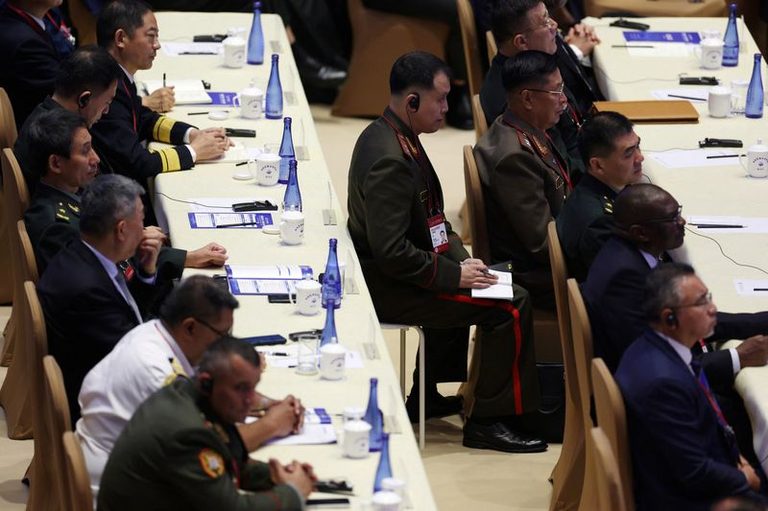
In a blunt statement at the Xiangshan security forum in China, North Korea’s vice defence minister Kim Kang Il warned that the United States’ accelerating weapons build‑up compels the Hermit Kingdom to expand its nuclear deterrent. Kim said the North will press ahead with measures to bolster what he described as a “self‑defensive nuclear deterrent capability.”
The remarks came as senior Chinese officials gathered to discuss regional security challenges. Kim’s comments underscore Pyongyang’s long‑standing narrative that U.S. military modernization in the Indo‑Pacific threatens its sovereignty and justifies a stronger nuclear posture.
Kim did not provide specific details about the types of weapons or the timeline for the expansion, but he emphasized that the effort is defensive, not aggressive. He framed the nuclear program as a necessary shield against what he called an “unprecedented U.S. arms buildup.”
U.S. Perspective
The United States has repeatedly warned that North Korea’s nuclear ambitions pose a grave threat to regional stability and to American allies. While the Trump administration has taken a hard line on Pyongyang’s weapons program, it continues to pursue diplomatic channels aimed at denuclearization, coupled with a robust military posture to deter aggression.
U.S. officials have not directly responded to Kim’s latest statements, but the administration’s policy remains focused on preventing further proliferation and protecting the security of the United States and its partners.
Implications for Regional Security
Analysts note that rhetoric from both sides can heighten tensions in an already volatile region. The Korean Peninsula, already home to the world’s most heavily fortified border, could see increased military activity if North Korea accelerates its nuclear development in response to perceived U.S. threats.
China, hosting the forum, has traditionally acted as a diplomatic bridge between the United States and North Korea. Beijing’s role in facilitating dialogue may become more critical if the nuclear rhetoric escalates.
What This Means for Americans
For U.S. citizens, the development serves as a reminder of the importance of a strong national defense and continued vigilance in foreign policy. The administration’s commitment to safeguarding American lives and interests abroad remains a cornerstone of its foreign‑policy agenda.
As the United States monitors North Korea’s statements and actions, policymakers will likely weigh additional diplomatic outreach against the need to maintain a credible deterrent posture in the region.
Original reporting: Appleton, WI News Feed (HLL/CB) — read the source article.