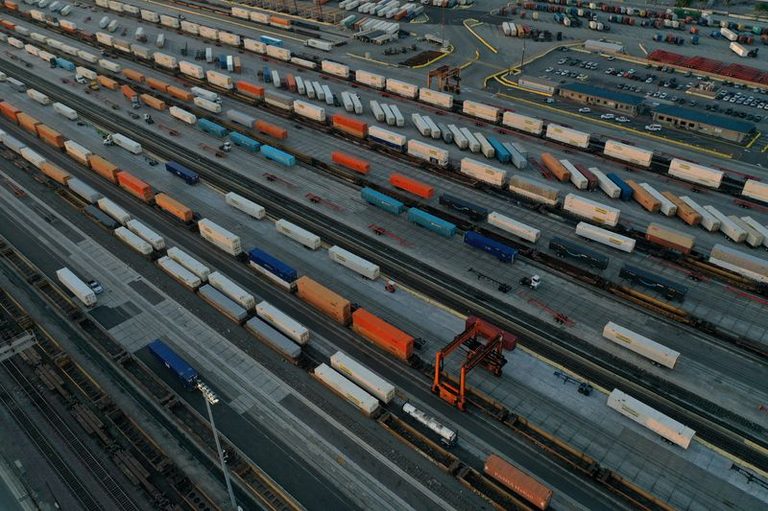
Union Pacific, the nation’s largest freight railroad, announced Wednesday that soaring diesel fuel prices are driving a noticeable shift of freight shipments from trucks to rail. The change, highlighted by Chief Financial Officer Jennifer Hamann at the Morgan Stanley Laguna Conference, reflects shippers’ search for lower transportation costs amid a volatile energy market.
Fuel costs pressure trucking, create rail opportunity
Hamann noted that diesel prices are expected to average about $4.25 per gallon in the third quarter, yet the railroad is currently paying roughly $5.25 to $5.30 per gallon. The higher cost structure is squeezing trucking operators’ operating ratios, prompting many of their customers to explore the fuel‑efficiency advantage of rail transport.
Rail demand remains robust despite higher energy costs
Even with the elevated fuel expense, Union Pacific said its underlying business remains solid. The company continues to see broad‑based strength in industrial shipments and intermodal traffic, which together are driving volume growth for the quarter. Hamann emphasized that the railroad has not yet experienced significant demand destruction from the higher energy environment; customers remain “pretty bullish,” citing healthy order books and inventory trends that point to continued freight demand.
Leadership perspective on the broader economy
CEO Jim Vena echoed the CFO’s comments, acknowledging that elevated fuel prices are not ideal for the broader economy. Nevertheless, he stressed that Union Pacific has not observed a slowdown in shipments so far, underscoring the railroad’s resilience and the essential role rail plays in moving goods efficiently across the country.
Implications for shippers and the logistics sector
The shift from truck to rail could have several downstream effects. Shippers may benefit from lower per‑mile costs and reduced exposure to volatile diesel markets, while trucking firms could face pressure to improve fuel efficiency or pass higher costs onto customers. For the logistics industry as a whole, the trend highlights the strategic importance of multimodal transportation solutions that balance cost, speed, and reliability.
What’s next for Union Pacific?
Union Pacific plans to monitor fuel price trends closely and continue leveraging its extensive rail network to offer cost‑effective alternatives to trucking. The company’s focus remains on maintaining strong service levels, expanding capacity where demand grows, and preserving its competitive edge in a market where energy costs play an increasingly pivotal role.
As diesel prices fluctuate, shippers and carriers alike will likely keep evaluating the most economical routes for moving goods. Union Pacific’s recent comments suggest that rail will remain a vital component of the nation’s freight infrastructure, especially when fuel costs make trucking less attractive.
Original reporting: Appleton, WI News Feed (HLL/CB) — read the source article.