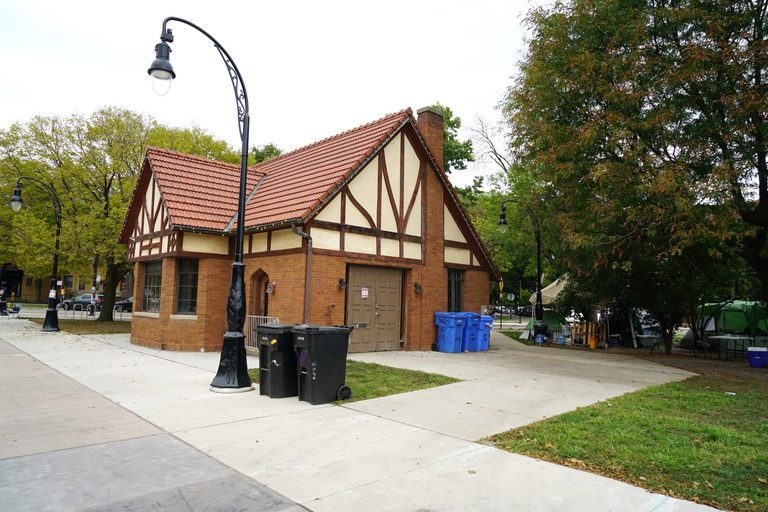
Logan Square – The city‑owned Comfort Station, a nearly 100‑year‑old building at 2579 N. Milwaukee Ave., will close this month for its first major overhaul since reopening in 2010. The renovation includes exterior tuckpointing, new paint, interior plumbing, electrical upgrades, a gender‑neutral ADA restroom, and updated water and gas services.
Local Coordination Keeps Tension Low
Interim executive director Kitty Rauth said a construction fence will go up Monday, requiring the four‑tent encampment that has been living near the site to move a few feet. Despite the relocation, nearby residents and unhoused neighbors have expressed little concern. One woman living in a tent, who asked to remain anonymous, said, “I will move my tent a few feet away, it’s not a big deal… I will be here until I get moved into my new apartment.”
Alderman Anthony Quezada (35th Ward) estimates the work will continue through at least May and possibly until the end of July. He noted that three people from the encampment have already been connected to housing, calling these outcomes “fruits of our labor.”
Building Trust Over Years
Rauth, who has been with Comfort Station for six years, emphasized the long‑standing relationship between the organization and unhoused neighbors. “We have unhoused neighbors pop up on the lawn every summer since I’ve been at Comfort Station,” she said. “We’ve offered bathrooms and charging stations when we’re open. It’s been important to maintain that relationship because it helps us run our programming more easily when there’s trust built.”
During outdoor programs earlier this year, organizers reported no major issues with the tent residents. David “Neighbor Dave” Bachman, an unhoused longtime resident of Logan Square, has moved twice this year to stay clear of construction zones. He creates sculptures from found objects and helps keep the square clean. Bachman, who struggles with mental‑health and substance‑use challenges, said he prefers to avoid shelters after negative experiences and is considering a rehab program at Haymarket Center while awaiting a housing match through the Department of Family and Support Services.
City Efforts Amid Funding Cuts
The article notes that the Trump administration has reduced funding for housing‑first models that have demonstrated success. While this federal cut presents a hurdle, local officials continue to use the Coordinated Entry System to prioritize the most vulnerable individuals for housing. Department spokesperson Linsey Maughan clarified that the city does not have the authority to forcibly remove individuals from public spaces.
Quezada highlighted the broader homelessness challenge, noting that many seniors on fixed incomes risk losing their homes. “There are so many residents who come into our office every single day, primarily senior citizens, who can’t afford their property taxes,” he said. “The crisis of homelessness and housing instability is extremely pervasive and it touches every single corner of our city.”
Positive Trends in the Square
Earlier this year, about ten people were living in the Logan Square area; that number has now dropped to roughly five, according to the alderman. While some nearby business owners have expressed concerns about the $27 million plaza project slated for completion, many neighbors report no significant issues with the encampment.
Both Rauth and Quezada hope the renovation process will foster greater understanding and reciprocity between longtime residents and unhoused neighbors. “What I hope for is a reciprocity and respect between the two sets of neighbors — the capital N neighbors of Logan Square and encampment neighbors,” Rauth said.
Original reporting: Block Club Chicago — read the source article.