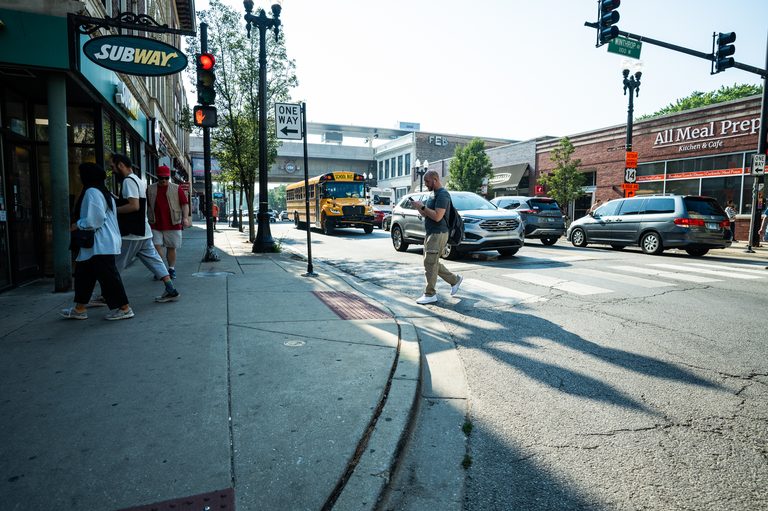
EDGEWATER — In a move aimed at protecting families and pedestrians, Alderman Leni Manaa‑Hoppenworth (48th Ward) announced a proposal to reduce the speed limit on residential side streets from 25 mph to 20 mph. The ordinance, which targets side streets and excludes major thoroughfares such as Devon Avenue, Sheridan Road, Foster Avenue, Ridge Avenue and Broadway, was presented to the City Council’s Committee on Pedestrian and Traffic Safety and passed the committee on Tuesday.
Why the Change Matters
The 48th Ward, which almost entirely overlaps Edgewater, has long struggled with cut‑through traffic from the Far North Side and surrounding suburbs seeking quicker routes to Lake Shore Drive. Alderman Manaa‑Hoppenworth explained that lowering speed limits on quieter streets is a proven tool to encourage drivers to travel more cautiously, making streets safer, more organized and more predictable.
Safety Record Supports the Proposal
According to city data, the 48th Ward led Chicago in having the fewest traffic fatalities and serious injuries in 2025 and has not recorded a traffic death in three consecutive years. The alderwoman attributes this success to previous traffic‑calming measures, including a prior reduction of Broadway’s speed limit from 30 mph to 25 mph.
Nevertheless, the ward still experiences a high volume of crashes. The city’s annual traffic‑crash report shows that the two most injury‑prone corridors in Chicago are located within or border the 48th Ward: Broadway from Bryn Mawr Avenue to Howard Street and Devon Avenue from Sacramento Avenue to Clark Street. Between 2020 and 2024, the ward saw 124 people injured or killed in traffic incidents, compared with 96 in the neighboring 49th Ward (Rogers Park) and 134 in the 46th Ward (Uptown).
Evidence Behind the 20‑mph Target
In her announcement, Alderman Manaa‑Hoppenworth cited city crash data indicating that a majority of traffic deaths involve drivers traveling at high speeds. She emphasized that the difference between 25 mph and 20 mph is significant for saving lives. “Evidence proves that drivers are more likely and quickly able to come to a complete stop when going 20 mph, greatly reducing the chance for collisions,” she said. “Pedestrian survival rates rise to as much as 90 percent when drivers travel at 20 mph.”
Broader Traffic‑Calming Efforts
The proposed speed‑limit reduction builds on recent infrastructure improvements in Edgewater. In 2025 the city revamped Granville Avenue, converting portions to one‑way traffic to reduce congestion on a street that sees roughly 7,000 vehicles daily—about three times the volume of typical residential streets. Officials noted that most crashes on Granville involved drivers from outside the neighborhood.
Additional safety projects championed by Alderman Manaa‑Hoppenworth include new pedestrian refuge islands along Broadway, renovated intersections near Senn High School, and a ban on electric ride‑share bikes and scooters on Sheridan Road.
Next Steps
While the side‑street ordinance has cleared the committee, it still requires approval by the full City Council. The alderwoman indicated that similar measures for the rest of the ward will follow “as soon as possible.” The Chicago Department of Transportation has not yet commented on the proposal.
Residents who support the initiative are encouraged to attend upcoming council meetings and voice their backing for safer streets that protect children, seniors and families alike.
Original reporting: Block Club Chicago — read the source article.