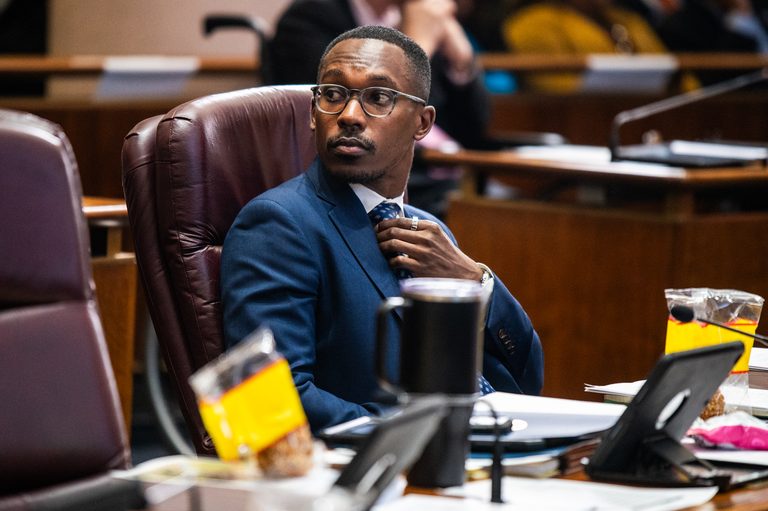
Fulton Market – Alderman Walter Burnett Jr., the 27th Ward representative, is using a recent shooting on West Loop’s Restaurant Row as a catalyst for two new city measures aimed at protecting residents and restoring order around nightlife venues.
Incident that sparked the proposals
At about 1:51 a.m. on Sunday, police responded to a shooting near the West Loop Athletic Club at 1380 W. Randolph St. The altercation began inside Expat, a local bar, where two men were asked to leave after a fight. The dispute continued in the club’s parking lot, and both men exchanged gunfire. Officers recovered a firearm and took the 29‑year‑old suspect into custody; he suffered minor graze wounds and was treated at Stroger Hospital. The second individual fled and has not yet been located.
Parking ban to curb loitering
Burnett says the incident highlights a broader problem: patrons gathering in metered spots after bars close, often drinking from their cars and creating noise complaints. “Everyone knows that after 11 p.m. the meters are free … and that’s a problem,” he told Block Club. To deter this behavior, he plans to introduce an ordinance this month that would prohibit parking in metered spaces after 11 p.m. on streets such as Fulton, Lake and Randolph.
The concept mirrors a temporary overnight parking restriction that was first implemented on Milwaukee Avenue in Wicker Park in 2021 and later made permanent in 2022. That measure helped reduce street‑level partying and related disturbances in that neighborhood.
Faster enforcement of liquor licenses
In addition to the parking proposal, Burnett is drafting legislation to give the city more immediate tools to address bars that repeatedly violate the terms of their operating permits. Under current rules, violations are documented and later used in broader license enforcement actions, a process that can take months and often only results in closure after a serious violent incident.
Burnett points to the ongoing case against Habibti, a West Loop bar and restaurant that has faced repeated complaints about patrons loitering, public urination, littering and fights outside the establishment. The Chicago Department of Business Affairs and Consumer Protection has already ordered Habibti to prevent loitering and to disperse crowds after closing, but Burnett argues that the city needs a mechanism to act more swiftly when businesses repeatedly ignore such directives.
He notes that Chicago police can issue a summary closure when a venue poses an imminent threat to public safety, typically after a violent event. However, many alderpeople have argued for years that businesses with long histories of complaints should face quicker consequences, rather than waiting for a shooting or other serious incident.
Community impact and next steps
Residents of the West Loop have voiced concerns that crowds spilling onto surrounding streets and parking lots create safety hazards and diminish quality of life. By restricting late‑night parking and tightening license enforcement, Burnett hopes to give neighbors a quieter, safer environment while still allowing businesses to operate responsibly.
Both proposals are still being drafted, and Burnett aims to introduce them to the City Council later this month. If passed, the measures would represent a proactive approach to managing nightlife‑related disturbances and could serve as a model for other Chicago neighborhoods facing similar challenges.
Original reporting: Block Club Chicago — read the source article.