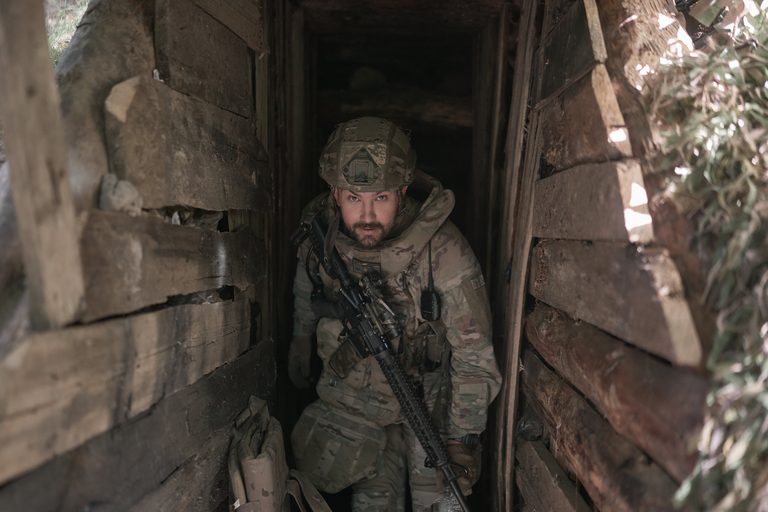
Former Google chief executive Eric Schmidt, now leading rocket maker Relativity Space, told NBC News that the Ukraine‑Russia war is becoming a testing ground for rapid military innovation. He warned that the battlefield’s “kill zones” – where a single drone can strike a soldier in minutes – are expanding as both Kyiv and Moscow field ever‑more advanced unmanned systems.
Innovation outpacing advantage
Schmidt, who previously chaired the U.S. National Security Commission on Artificial Intelligence, said the rate of new weapon development is faster than anything he has seen in his tech career. He noted that Russia, once considered a slower, less capable adversary, has closed the gap by fielding newer drones and glide‑bombs, eroding the early edge Ukraine enjoyed.
“Whoever plays the game of fastest innovation to scale will win this war,” Schmidt told Richard Engel on the podcast The World with Richard Engel and Yalda Hakim. He added that artificial intelligence will soon enable computers to direct swarms of thousands of drones, something humans cannot manage manually.
Drone warfare on the front lines
Both sides now rely heavily on small first‑person‑view (FPV) drones that act like bullets, hunting exposed troops and forcing soldiers to stay under cover. Russian forces also deploy powerful glide bombs, while Ukraine counters with anti‑drone nets and increasingly sophisticated interceptors.
Schmidt explained that Russia has begun fitting Iranian‑designed Shahed attack drones with inexpensive Chinese jet engines, boosting their cruising speed to over 300 miles per hour – far faster than the 110‑mile‑per‑hour models Ukraine previously countered. To meet this threat, Ukraine is adding jet engines to its own anti‑drone systems.
Casualties and humanitarian concerns
Ukraine’s Defense Ministry estimates that Russian forces suffered roughly 42,000 killed or wounded in August, about 1,350 a day, marking one of the highest monthly tolls since the invasion began. British military chief Air Chief Marshal Richard Knighton said total Russian casualties have reached 1.5 million, including around 500,000 dead.
Schmidt described the human cost as “horrible,” emphasizing that the war’s escalation threatens families on both sides.
U.S. involvement and President Trump’s stance
President Donald Trump, who campaigned on a promise to end the conflict within 24 hours, has repeatedly urged Ukraine to consider territorial concessions that align with Moscow’s demands. While critics argue this approach could embolden Russia, the administration maintains that diplomatic pressure is necessary to bring the fighting to a swift conclusion.
Calls for Western learning and assistance
Schmidt urged Western nations to study Ukraine’s experience and incorporate the lessons into their own defense planning. “How could we not be capturing this knowledge in the West to defend our own countries?” he asked.
He also highlighted Ukraine’s need for additional financial and technological aid to counter the evolving wave of faster drones and AI‑driven tactics. “If that help comes, I think Ukraine can hold,” he concluded.
Original reporting: Dallas TX News (HLL/CB) — read the source article.