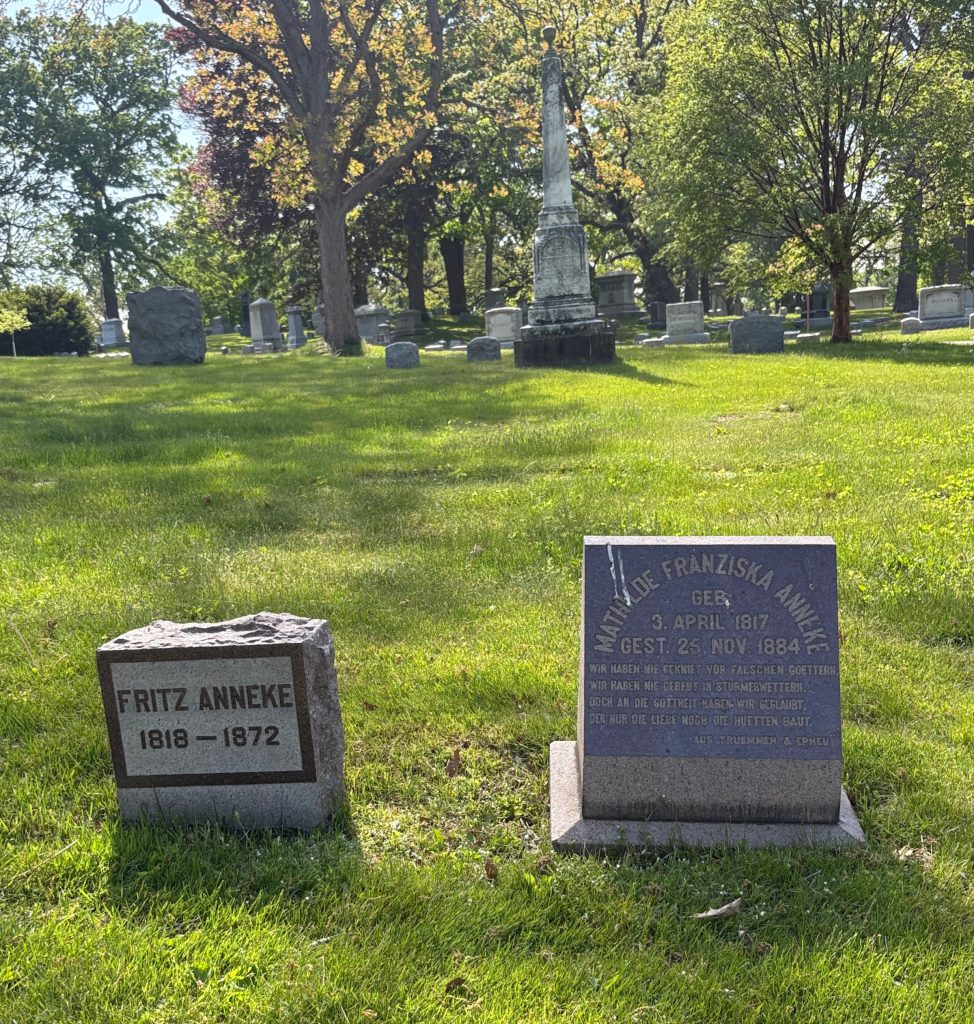
There is a moment, maybe fifteen minutes into a walk through Forest Home Cemetery, when the noise of the city completely disappears. The traffic on Forest Home Avenue fades. Your phone stops feeling urgent. You become aware, instead, of the crunch of gravel under your shoes, the rustle of mature oak canopy overhead, and the particular stillness that only a landscape this old can hold. It is not eerie. It is clarifying.
Forest Home Cemetery sits on the near southwest side of Milwaukee, just a few miles from downtown, and it has been quietly anchoring this neighborhood since 1850. That makes it older than Wisconsin’s statehood by a comfortable margin, and the grounds reflect every decade of the city’s evolution in the most literal way imaginable. The founders of Milwaukee’s great industrial families, the architects who shaped its skyline, the politicians who built its civic institutions — they are all here, and their monuments tell the story of this city with a specificity that no textbook quite matches.
Walk the main loop and you will pass the graves of figures like Solomon Juneau, Milwaukee’s first mayor and one of the city’s original European settlers, and Victor Berger, the first Socialist elected to the United States Congress — a fact that still says something meaningful about Milwaukee’s working-class character. The monuments range from modest granite markers to genuinely breathtaking Victorian sculpture, including towering obelisks, weeping bronze angels, and elaborate mausoleums that look borrowed from a European capital. The craftsmanship is extraordinary, and because the cemetery has been maintained with real care, most of it is in remarkably good shape.
Forest Home is also a legitimate arboretum. The grounds were designed in the rural cemetery tradition of the mid-nineteenth century, which meant treating the landscape as a destination for the living as much as a resting place for the dead. Winding paths, rolling topography, ponds, and specimen trees planted over 170 years ago make this one of the genuinely beautiful green spaces in the entire city. Birders know it well — the mature tree cover makes it a reliable stopover during migration season, and a quiet morning walk in May can turn into an impromptu birding session without any planning at all.
The cemetery offers guided tours on select dates throughout the year, led by volunteers who have clearly done their research and love sharing it. These tours are worth planning around. The stories are well-sourced, entertaining, and occasionally surprising in the way that good local history always is. Check their website or call ahead for the current schedule, as dates shift seasonally.
Admission to walk the grounds is free and open during daylight hours. The main entrance is on Forest Home Avenue, with ample street parking nearby. Wear comfortable shoes — the terrain is gently uneven in the best possible way — and give yourself at least an hour. You will almost certainly want two.
Forest Home is the kind of place that rewards the curious and the unhurried. It is not a tourist attraction in the conventional sense. There is no gift shop, no admission desk, no interpretive center with a sponsored exhibit. What it offers instead is direct, unmediated contact with the actual history of this city, written in stone and bronze and the patient growth of very old trees. Come once and you will understand Milwaukee differently. Come twice and you will start noticing the names on the monuments in other parts of the city — on street signs, on building facades, on the walls of the public library — and the whole place will suddenly feel more layered and alive.
That is the quiet magic of Forest Home Cemetery. It does not announce itself. It simply waits, available to anyone willing to slow down long enough to listen.